جهت مشاهده اطلاعات به تفکیک سال، به بخش اطلاعات آماری در منوی اطلاعات نشریه مراجعه فرمایید.
اولین سال انتشار
1390
تعداد دورهها
16
تعداد شمارهها
41
تعداد نویسندگان
1,038
تعداد مقالات ارسال شده
1,438
تعداد مقالات رد شده
786
تعداد مقالات پذیرفته شده
596
تعداد داوران
465
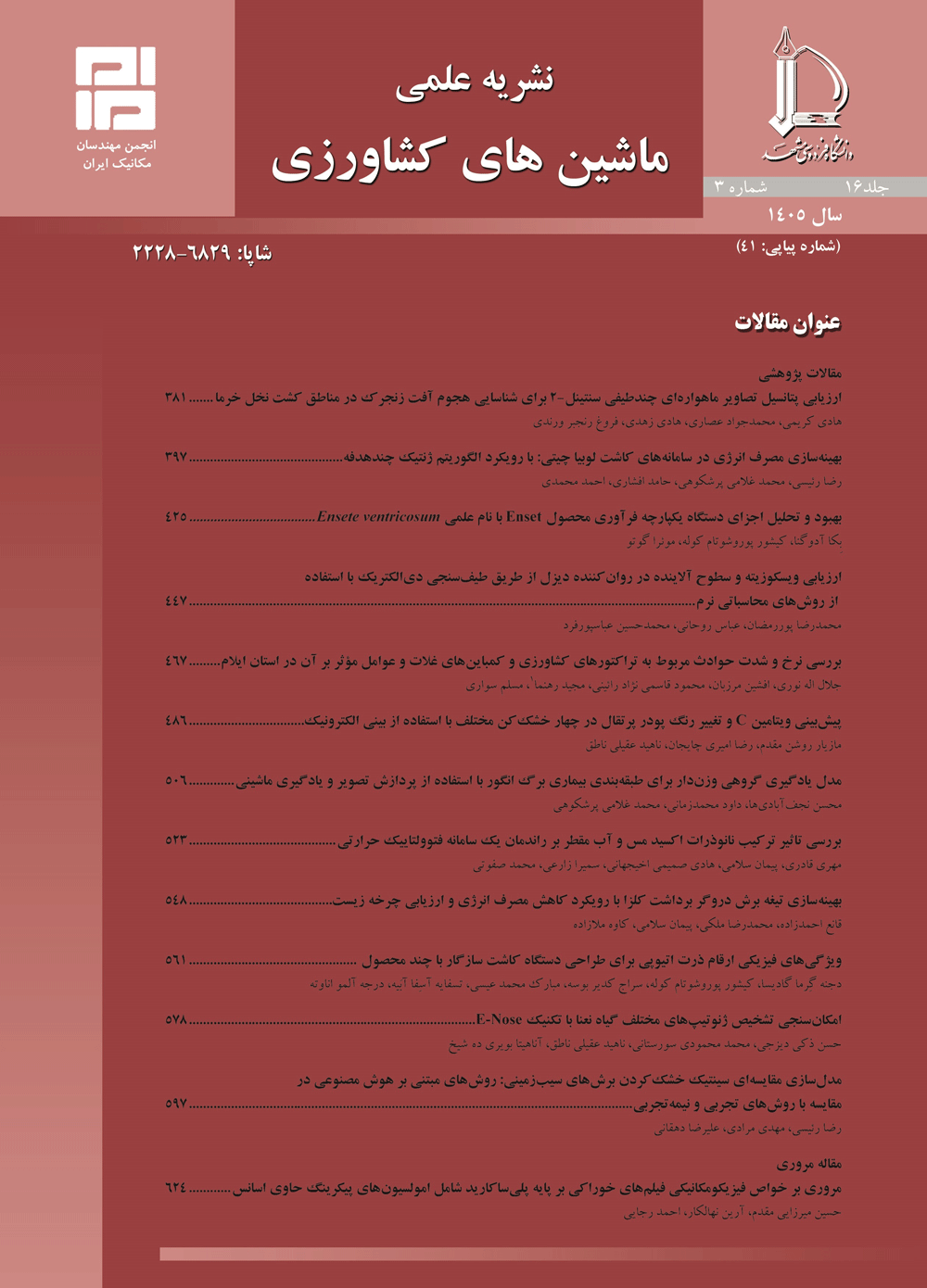
نشریه علمی "ماشین های کشاورزی" در سال 1389 توسط دانشگاه فردوسی مشهد با همکاری انجمن مهندسان مکانیک ایران راهاندازی شد. این نشریه تلاش دارد تا با انتشار آخرین نتایج تحقیقات متخصصان در زمینه طراحی، ساخت و ارزیابی ماشینهای مختلف مزرعه و تجهیزات ثابت زراعی، مکانیزاسیون و مدیریت ماشین در واحدهای زراعی، باغی، دامی و تجهیزات فراوری پس از برداشت چشمانداز روشن و مشخصی را برای محققین بهمنظور تحقق کشاورزی دقیق و مدرن فراهم نماید.
در این نشریه مقالات در انواع پژوهشی، کوتاه یا مروری و به دو زبان فارسی یا انگلیسی قابل بررسی و چاپ هستند.
این نشریه در پایگاه اسکوپوس و در Emerging Sources Citation Index™ (ESCI) پایگاه وبآوساینس نمایه میشود.
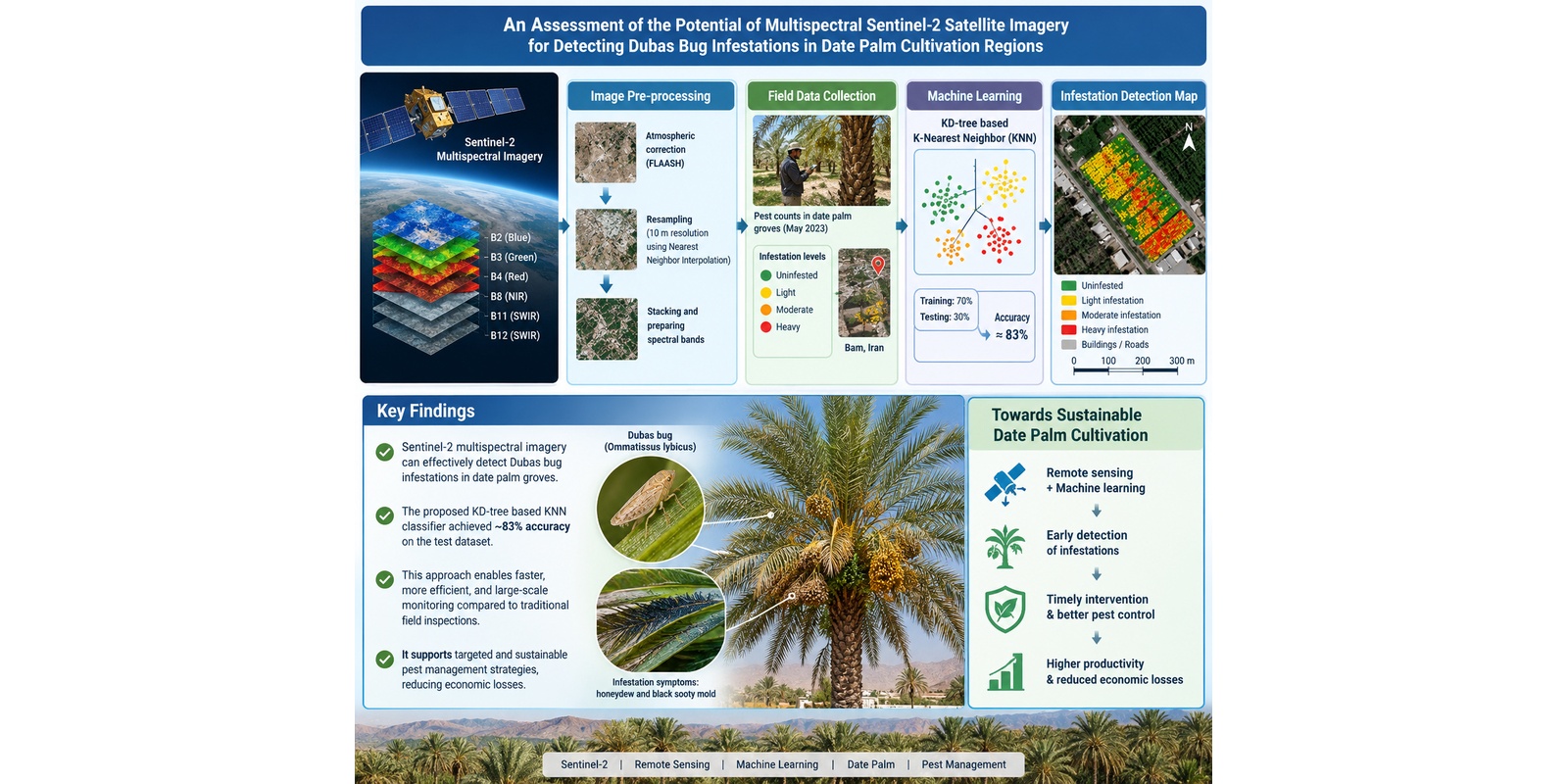
چکیده زنجرک خرما با تضعیف درختان خرما و کاهش تولید میوه، کشاورزی در خاورمیانه را تهدید میکند. شناسایی محل آلودگی برای کنترل موثر آفات بسیار مهم است. با این حال، بازرسی منظم میدانی میتواند پرهزینه، دشوار و زمانبر باشد، بهخصوص در مناطق وسیع. این مطالعه توانایی تصاویر ماهوارهای چندطیفی سنتینل-۲ را برای شناسایی مکانهای هجوم زنجرک خرما برای بهبود نظارت و فعال کردن کنترل فوری آفات، در نتیجه کاهش خسارات مالی، ارزیابی میکند. آزمایش صحرایی برای ارزیابی آلودگی در اردیبهشت 1402 همزمان با اوج شیوع آفت انجام شد. شدت آلودگی از طریق شمارش آفات در نخلستانهای منطقه شهری بم تعیین شد. تصاویر چندطیفی سنتینل-۲ از یک منطقه خاص بهدست آمد، برای تصحیح، آمادهسازی دادههای خام و استخراج اطلاعات پردازش شد. پس از مرحله پیشپردازش، مدل طبقهبندیکننده K-Nearest Neighbor مبتنی بر درخت KD برای توسعه مدلی با تمرکز بر شناسایی مکانهای آلوده انتخاب شد. برای آموزش، 70 درصد از دادههای میدانی اندازهگیریشده، شامل مناطق غیرآلوده و مناطق با سه سطح آلودگی از سبک تا شدید و همچنین سایر ویژگیهای زمین مانند ساختمانها، جادهها و غیره استفاده شد. 30 درصد باقیمانده دادهها برای ارزیابی مدل آموزشدیده استفاده شد. مدل طبقهبند آموزشدیده در مقایسه با دادههای حقیقت پایه، در حدود 83 درصد پیشبینیهای درست را با مجموعه داده آزمایشی بهدست آورد. این دقت، توانایی تصاویر چندطیفی سنتینل-۲ و یادگیری ماشینی را برای شناسایی هجوم حشرات به زنجرک خرما در نخلستانها برجسته میکند و میتواند مدیریت هدفمند و پایدار آفات را تسهیل کند.
چکیده این پژوهش با هدف بهبود طراحی و عملکرد دستگاه یکپارچه فرآوری Enset انجام شد و تمرکز آن بر روی اجزای کلیدی مانند شفت، درام استوانهای، صفحه محافظ (بِرِستپلیت) و تیغه درام بود. دستگاههای موجود فرآوری Enset به دلیل فرسودگی قطعات، خرابیهای مکانیکی و طراحی نامناسب با ناکارآمدیهایی مواجه هستند که منجر به چالشهای عملیاتی میشود. برای رفع این مشکلات، اصلاحات هدفمند در طراحی قطعات دستگاه برنامهریزی شد. مواد مورد استفاده برای این قطعات بر اساس استانداردهای ASTM انتخاب گردید. قطعات اصلاحشده با استفاده از روش اجزای محدود در ماژول ورکبنچ نرمافزارANSYS 2023 R1 در دانشگاه علوم و فناوری آداما، اتیوپی، بهطور دقیق تحلیل شدند. نتایج مطالعه نشان داد که حداکثر تنشها برای شفت، درام استوانهای، تیغه و صفحه محافظ بهترتیب برابر با 120، 250، 400 و 260 مگاپاسکال و حداقل تنشها بهترتیب 30، 70، 120 و 80 مگاپاسکال بودند. بیشترین تغییر شکلها نیز بهترتیب 0.15، 0.3، 0.55 و 0.35 میلیمتر گزارش شد و ضریب ایمنی بیشینه برای همه قطعات برابر با 15 بود. این نتایج نشان میدهد که اصلاحات انجام شده شرایط کاری ایمن را فراهم میکند. طراحی به گونهای است که درام، تیغه درام و صفحه محافظ سختی کافی برای تحمل نیروهای عملیاتی را دارند و تغییر شکل حداقلی (2.39×10⁻⁶ میلیمتر برای تیغه درام) در محدوده ضریب ایمنی 1.25 باقی میماند. علاوه بر این، دستگاه عملکرد بسیار خوبی در جذب انرژی و پاسخ ارتعاشی از خود نشان داد که بیانگر استحکام ساختاری آن است.
محمدرضا پوررمضان، عباس روحانی، محمد حسین عباسپورفرد
چکیده نظارت بر وضعیت ماشینآلات یکی از جنبههای حیاتی واحدهای تولیدی و خدماتی برای حفظ کارایی عملیاتی است. از این رو، تعویض بهموقع روغن موتور بهطور قابلتوجهی به افزایش عملکرد و افزایش طول عمر موتور کمک میکند. با این حال، تعیین زمان دقیق تعویض همچنان یک چالش است. آنالیز طیفی روغن، در عین اینکه موثر است، هم گران و هم زمانبر است. هدف این مطالعه معرفی یک روش جایگزین برای تحلیل طیفی روانکار موتور است. این تحقیق شامل تجزیه و تحلیل نتایج تجزیه و تحلیل طیفی و ضرایب دیالکتریک 17 نمونه روغن موتور از طریق روشهای آماری است. هدف اصلی توسعه مدلهایی برای پیشبینی آلایندههای موجود در روغن بر اساس خواص دیالکتریک است که جایگزینی برای تجزیه و تحلیل طیفی ارائه میدهد. برای رسیدن به این هدف چند هدف میانی دنبال میشود. شبکه عصبی مصنوعی پرسپترون چندلایه (MLP-ANN) و روش ماشین بردار پشتیبان (SVM) برای مدلسازی استفاده میشوند. عملکرد دو مدل با استفاده از شاخصهایی مانند ریشه میانگین مربعات خطا (RMSE)، کارایی مدل و ضریب تبیین (R2) ارزیابی میشود. نتایج نشان میدهد که مدل SVM بهطور مداوم کارایی بیش از 0.95 را برای همه شاخصهای پیشبینیشده (Fe، Pb، Cu، Al، Mo، Na، Si وVis@100) نشان میدهد. در نتیجه، طیفسنجی دیالکتریک روانکننده بهعنوان یک جایگزین مناسب برای آنالیز مرسوم طیفی روغن متصور میباشد.
جلال الهنوری، افشین مرزبان، محمود قاسمینژاد رایینی، مجید رهنما، مسلم سواری
چکیده کشاورزی یک صنعت غالب در کشورهای در حال توسعه است و در رتبه خطرناکترین مشاغل قرار میگیرد. تراکتورها و ماشینهای برداشت غلات از ماشینهای کشاورزی خودگردان هستند که علیرغم نقش بیبدیلشان در افزایش بهرهوری، سهم قابلتوجهی در حوادث دارند. این حوادث هزینههای زیادی را بههمراه دارد و بهرهوری را کاهش میدهد. این مطالعه بهمنظور بررسی میزان و شدت حوادث و تلفات انسانی و عوامل موثر بر حوادث مزرعهای مربوط به تراکتورها و کمباینهای کشاورزی در استان ایلام با استفاده از دادههای مربوط به سالهای 1402-1398 انجام شد. فراوانی حوادث تراکتورها و کمباینها در مطالعه انجامشده، بهترتیب 61 و 43 بود که نشاندهندهی اختلاف آماری معنیداری است. در این تحقیق در بین رانندگان تراکتور بیشترین حوادث ناشی از محور (P.T.O.)، هلیس و غلتکهای تغذیه و در بین رانندگان کمباین، رایجترین حوادث مربوط به نقاط برشی ماشین (شانه برش، چرخدندهها و غیره) بود. نرخ حوادث از جمله AFR (نرخ فرکانس حادثه)،ASR (نرخ شدت حادثه)،FIR (نرخ حادثه مرگبار) و FSI (شاخص شدت تکرار حادثه) محاسبه شد. میزان AFR، ASR،FIR و FSI بهترتیب 25.84، 45.82، 1.66 و 1.066 برای کمباینها و 5.60، 12.63، 4.44 و 0.262 درصد برای حوادث تراکتور بوده است. نرخ حوادث غیرمرگبار برای رانندگان کمباینها 6445 در هر 100000 و برای رانندگان تراکتورها 4334 در هر 100000 بود، با این حال، تعداد حوادث کشنده تراکتور بیشتر از کمباینها بود (445 و 330 در هر 100000 دستگاه).
چکیده در این تحقیق، مقدار ویتامین C، ترکیبات معطر و تغییر رنگ پودر پرتقال با استفاده از روشهای شیمیایی، دستگاه بویایی و اسکنر در چهار خشککن در دمایC ° ۴۵ درجه سانتیگراد اندازهگیری شد. این دستگاههای خشککن شامل خلاء اتمسفر معمولی، خلاء کنترل اتمسفر، همرفتی و همرفتی-مادون قرمز بودند. بیشترین پاسخ حسگرها به ترکیبات معطر در خشککنهای همرفتی و کمترین پاسخ در خشککنهای خلاء کنترل و خلاء معمولی مشاهده شد. دو مؤلفه اصلی تحلیل مؤلفههای اصلی (PCA) ۸۸% از واریانس دادهها را توضیح دادند. ساختار شبکه عصبی مصنوعی (ANN) ۸-۵-۴ بود. علاوه بر این، بر اساس نمودارهای بارگذاری مدلهای حداقل مربعات جزئی (PLS) و رگرسیون مؤلفههای اصلی (PCR)، حسگرهای MQ3 و MQ6 بهترین حسگرها برای پیشبینی میزان ویتامین C و تغییر رنگ پودر پرتقال بودند. حسگرMQ135 نیز به دلیل دقت پایین و کاهش هزینه، میتواند از مجموعه حسگرهای بینی الکترونیکی حذف شود. رگرسیون خطی چندگانه (MLR)، در مقایسه با مدلهای PCR وPLS، دقیقتر عمل کرد، یعنی R2= 0.83 و RMSE= 0.144 برای پیشبینی ویتامین C و R2= 0.94 و RMSE= 0.68 برای پیشبینی تغییر رنگ محاسبه شدند. بیشترین و کمترین مقادیر تغییر رنگ اندازهگیریشده بهترتیب در خشککن همرفتی و خشککن خلاء کنترل اتمسفری مشاهده شد. همچنین، بیشترین و کمترین ویتامین C اندازهگیریشده بهترتیب در خشککن همرفتی-مادون قرمز و خشککن خلاء کنترل اتمسفری مشاهده شد. بهترین خشککن برای حفظ کیفیت پودر پرتقال، خشککن همرفتی-مادون قرمز بود. نتایج این مقاله نشان داد که دادههای بهدستآمده از دستگاه بویایی قادر به پیشبینی تغییر رنگ و ویتامین C پودر پرتقال است. همچنین، میتوان از دستگاه بویایی برای شناسایی و طبقهبندی نوع خشککن مورد استفاده برای تهیه پودر پرتقال با کمترین زمان و هزینه، بدون تخریب نمونه، و تعیین بهترین خشککن برای تهیه پودر پرتقال استفاده کرد.
محسن نجف آبادیها، داود محمدزمانی، محمد غلامی پرشکوهی
چکیده در این مطالعه، راهبردی برای تشخیص بیماریهای برگ انگور با کمک پردازش تصویر RGB و تصمیمگیری گروهی وزنی ارائه شد. برای این منظور، پنج گروه بیماری به نامهای سرخک سیاه، پوسیدگی سیاه، سوختگی برگ، سفیدک پودری و سفیدک کرکی و گروهی از برگهای سالم با سه روش یادگیری ماشینی به نامهای ماشین بردار پشتیبان (SVM)، جنگل تصادفی (RF) و k-نزدیکترین همسایه (k-NN) و ترکیب وزنی طبقهبندی شدند. در مرحله بعد، با توجه به دقت هر طبقهبندی، وزن هریک از آنها تعیین شد و در نهایت با استفاده از رای اکثریت، طبقهبندی نهایی بیماریها انجام شد. همچنین بهمنظور معرفی بهترین ویژگیهای بافت، رنگ و شکل استخراجشده از الگوریتم انتخاب ویژگی برجسته استفاده شد. این الگوریتم برای هر گروه از ویژگیهای استخراجشده، 5 مورد را بهعنوان بهترین و موثرترین ویژگی در تشخیص بیماریهای گیاهی از جمله برگ گیاه انگور به محققان ارائه کرد. نتایج دقت طبقهبندی باSVM، RF و k-NN بهترتیب 88.33، 80.08 و 75 درصد بود. نتایج نشان داد که الگوریتم تصمیمگیری گروه وزنی ارائهشده در این تحقیق توانایی بهبود دقت طبقهبندی بیماریهای گیاهی را با دقت 91.67 درصد دارد.
چکیده رشد سریع جمعیت جهان و افزایش تقاضا برای انرژی، همراه با نیاز فوری به حفاظت از محیطزیست، محققان را بر آن داشته است تا منابع انرژی تجدیدپذیر را بهعنوان جایگزینی مناسب برای سوختهای فسیلی تجدیدناپذیر بررسی کنند. این مطالعه بهبود عملکرد سیستمهای فتوولتاییک حرارتی (PVT) را با استفاده از روش خنککننده غوطهوری با نانوسیالهای اکسید مس ارزیابی میکند. دستگاه آزمایشی شامل یک محفظه شیشهای بود که سطح پنل خورشیدی در زیر آن غوطهور شده بود. آزمایشها در نسبت حجمی نانوسیال 0.0250% و 0.05% و نرخ جریان 0.01 و 0.02 لیتر در ثانیه انجام شد. ارتفاع غوطهور شدن در داخل محفظه شیشهای 5 سانتیمتر بود. آزمایشها در شرایط محیطی که شامل دمای محیط 20.6-31.2 درجه سلسیوس و تابش 343-924 وات بر مترمربع انجام شد. نتایج نشان داد که نانوسیالهای اکسید مس در نسبت حجمی 0.05 درصد و سرعت جریان 0.02 لیتر بر ثانیه، راندمان حرارتی را به 31.87 درصد بهبود داده و دمای سطح پانل را تا 11.8 درجه سلسیوس در مقایسه با خنککننده آب کاهش داده است. همچنین راندمان الکتریکی سامانه PVT از پنل مرجع فراتر رفت. راندمان کلی سیستم PVT به 41.89 درصد رسید. این یافتهها پتانسیل خنکسازی مبتنی بر نانوسیال را برای بهینهسازی راندمان سامانه PVT با افزایش مدیریت حرارتی نشان میدهد.
چکیده عملیات برداشت غلات حدود 30-25% از کل مصرف مستقیم انرژی در سیستمهای تولید محصولات کشاورزی را شامل میشود. با توجه به ویژگیهای خاص کلزا در مقایسه با سایر غلات، طراحی تیغههای مناسب برداشت آن ضروری است. این پژوهش به بررسی تأثیر زوایای تیغه (زوایای قرارگیری و تیزی: 30، 45 و 60 درجه)، سرعت حرکت رفت و برگشتی (800، 1100 و 1400 رفت و برگشت در دقیقه) و سطوح رطوبتی (19، 22 و 24 درصد) بر نیروی برش، تنش برشی و مصرف انرژی در برداشت کلزا پرداخت. نتایج نشان داد زاویه تیزی 30 درجه و زاویه قرارگیری 45 درجه بهترتیب کمترین تنش برشی (0.175 و 0.177 نیوتن بر میلیمتر مربع) را نسبت به زاویه 60 درجه (0.303 و 0.320 نیوتن بر میلیمتر مربع) ایجاد میکنند. افزایش رطوبت از 19 به 24 درصد، تنش برشی را از 0.256 به 0.200 نیوتن بر میلیمتر مربع کاهش داد. سرعت 1400 رفت و برگشت در دقیقه کمترین تنش برشی (0.167 نیوتن بر میلیمتر مربع) را در مقایسه با 800 رفت و برگشت (0.286 نیوتن بر میلیمتر مربع) نشان داد. ارزیابی چرخه حیات نشان داد تغییر زوایای قرارگیری، تیزی و سرعت رفت و برگشتی به ترتیب میتواند سمیت اکولوژیکی آبزیان دریایی را تا 55,762.55، 377,429.87 و 143,185.69 کیلوگرم معادل دیکلروبنزن افزایش دهد. ترکیب بهینه (زاویه تیزی 30 درجه، قرارگیری 45 درجه، رطوبت 24 درصد و 1400 رفت و برگشت در دقیقه) انرژی برشی و اثرات زیستمحیطی را به طور قابل توجهی کاهش داد.
دجنه گِرما گادیسا، کیشور پوروشوتام کوله، سراج کدیر بوسه، مبارک محمد عیسی، تسفایه آسِفا آبَیه، درجه آلمو اناوته
چکیده تولید ذرت توسط خردهمالکان در کشورهای جنوب صحرای آفریقا، که برای تامین امنیت غذایی منطقهای بسیار مهم است، با معضلات مداوم عملکرد دست و پنجه نرم میکند که ناشی از شیوههای کاشت پرزحمت و ضعف در مکانیزاسیون است، بهطوریکه مطابق با ویژگیهای ارقام گیاهی بومی طراحی نشده است. این مطالعه سه رقم ذرت (CML-539، Melkassa 3 و Melkassa 6Q) را برای توسعه پارامترهای طراحی برای کاشتکنندههای سازگار با چند محصول توصیف میکند. برای 100 دانه از هر رقم، خواص هندسی شامل طول، عرض و ضخامت با استفاده از کولیسهای دیجیتال اندازهگیری شد. تجزیه و تحلیل برای کشیدگی، قطرهای میانگین هندسی و حسابی، مساحت سطح، مساحت تصویر شده، سطح مقطع عرضی، کرویت، ضریب فرورفتگی، نسبت ابعاد، شاخص شکل و گردی انجام شد. خواص وزنی شامل چگالی حجمی و واقعی، تخلخل، جرم هزار دانه و زاویه استقرار بهطور سیستماتیک برای بهینهسازی مکانیسمهای جابهجایی بذر در طراحی دستگاه کاشت تجزیه و تحلیل شدند. تجزیه و تحلیل خواص فیزیکی، الزامات متمایزی را برای هر رقم نشان داد: مورفولوژی نامنظم CML-539 (طول 42/9 میلیمتر، تخلخل %49.30) نیاز به سیستمهای اندازهگیری ارتعاشی و هوادهی را نشان میدهد؛ خواص یکنواخت Melkassa 6Q (کرویت %6.66 ± 71.11، چگالی حجمی 811.62 کیلوگرم بر متر مکعب) امکان استفاده از مکانیسمهای تغذیه گرانشی را فراهم میکند؛ و ویژگیهای متوسط Melkassa 3 با نسبت کشیدگی بیش از 2.3 و تغییر چگالی %19.31 نیاز به شیاربازکنهای قابلتنظیم با زاویه شیب 25 تا 30 درجه را مشخص میکند. تغییرپذیری هندسی، پیادهسازی راهحلهای تطبیقی، مانند لولههای بذر انحنادار و شیاربازکنهای قابلتنظیم را برای جلوگیری موثر از کج شدن و پشتهسازی ضروری میسازد. سیستم کاشت مدولار حاصل، شامل اندازهگیری حساس به رطوبت، اندازهگیری تطبیقی سلولها و هوادهی، با استانداردهای کشاورزی-اکولوژیکی اتیوپی مبنی بر فاصله ردیف 75 سانتیمتر و عمق کاشت 4 تا 7 سانتیمتر مطابقت دارد. این چارچوب، یک مدل مقیاسپذیر و پایدار برای مکانیزاسیون دقیق خردهمالکان را ارائه میدهد و قابلانتقال به سیستمهای جهانی تولید ذرت است.
حسن ذکی دیزجی، محمد محمودی سورستانی، ناهید عقیلی ناطق، آناهیتا بویری ده شیخ
چکیده مطالعه حاضر به بررسی طبقهبندی ده ژنوتیپ نعناع توسط یک سیستم بینی الکترونیکی مبتنی بر حسگرهای نیمههادی اکسید فلزی (MOS) میپردازد. نمونههای برگ از ژنوتیپهای مختلف نعناع برداشت شد، سپس پاسخ سنسورهای سیستم به هر نمونه ثبت شد. برای طبقهبندی گیاهان، پاسخ تمام حسگرهای بینی الکترونیکی با روشهای تجزیه و تحلیل اجزای اصلی (PCA)، تجزیه و تحلیل تشخیص خطی (LDA)، تجزیه و تحلیل متمایز درجه دوم (QDA) و شبکه عصبی مصنوعی (ANN) مورد بررسی قرار گرفت. بر اساس نتایج تجزیه و تحلیل کیفی اسانسها توسط دستگاه GC-MS، بیش از 99 درصد ترکیبات شناساییشده در چهار گروه شیمیایی شامل هیدروکربنها و مونوترپنها و سسکوئیترپنهای اکسیژندار قرار داشتند. همچنین بر اساس تجزیه و تحلیل بای پلات، جمعیتهای مختلف نعناع را میتوان بهطور کلی به 8 گروه تقسیم کرد. نتایج تحلیل مؤلفههای اصلی با استفاده از دادههای بهدستآمده از سیستم نشان داد که دو مؤلفه اصلی اول میتوانند در مجموع 97 درصد از واریانس دادهها را پوشش دهند. دقت طبقهبندی با استفاده از دادههای بینی الکترونیکی برای تجزیه و تحلیل وضوح خطی، تجزیه و تحلیل وضوح درجه دوم و شبکه عصبی مصنوعی بهترتیب 98.9، 99.9 و 96% بهدست آمد. طبقهبندی مناسب ژنوتیپهای نعناع توسط سیستم بینی الکترونیکی میتواند بهعنوان جایگزینی حساس، قابلاعتماد و کمهزینه برای روشهای سنتی مورد استفاده قرار گیرد.
چکیده خشککردن یکی از روشهای حیاتی نگهداری در صنعت غذا است که با کاهش رطوبت، کیفیت محصول را حفظ کرده و ماندگاری آن را افزایش میدهد. این فرآیند شامل مکانیزمهای پیچیده انتقال حرارت و جرم بوده و به مدلهای پیشبینی دقیقی نیاز دارد. در این مطالعه، روشهای مختلف مدلسازی شامل مدلهای رگرسیون، مدلهای نیمهتجربی، و روشهای مبتنی بر هوش مصنوعی (AI) برای شبیهسازی فرآیند خشککردن برشهای سیبزمینی مورد مقایسه قرار گرفتند. آزمایشهای خشککردن در دماهای 40، 50 و 60 درجه سانتیگراد، با و بدون استفاده از مواد تغییر فازدهنده (PCM) و تابش مادون قرمز (IR) انجام شد. مدلهای هوش مصنوعی شامل شبکه عصبی مصنوعی (ANN)، ماشین بردار پشتیبان (SVM) و جنگل تصادفی (RF) با استفاده از دادههای تجربی آموزش دیده و اعتبارسنجی شدند. عملکرد این مدلها با مدلهای سنتی و نیمهتجربی از نظر ضریب تعیین (R2)، ریشه میانگین مربع خطا (RMSE)، میانگین قدرمطلق خطا (MAE) و خطای میانگین بایاس (MBE) مقایسه شد. نتایج نشان داد که شبکه عصبی مصنوعی (ANN) با دقت پیشبینی بسیار بالا (R2= 0.998, RMSE= 0.0656) بهترین عملکرد را داشته و از سایر مدلها دارای دقت بیشتری است. روشSVM نیز قابلیت پیشبینی مناسبی نشان داد، در حالیکه RF عملکردی اندکی ضعیفتر داشت. در میان مدلهای نیمهتجربی، مدل میدیلی (Midilli) بهترین برازش را داشت، اما نسبت به مدلهای مبتنی بر هوش مصنوعی دقت کمتری نشان داد. این یافتهها برتری روشهای مبتنی بر هوش مصنوعی، بهویژه ANN، را در بهینهسازی فرآیند خشککردن در صنعت غذا برجسته میسازد.
چکیده فیلمهای خوراکی زیستتخریبپذیر حاوی امولسیون پیکرینگ بهعنوان جایگزینی پایدار و نویدبخش برای مواد بستهبندی غذایی مرسوم مطرح شدهاند. این فیلمها دارای خواص مکانیکی بهبودیافتهای از جمله استحکام کششی، انعطافپذیری و قابلیت ممانعت بخار آب هستند که برای حفظ یکپارچگی مواد غذایی در طول نگهداری و حملونقل اهمیت دارند. یکی از پیشرفتهای کلیدی در این حوزه، استفاده از اسانسها در ماتریس امولسیون است که با وجود ماهیت آبگریز خود، خواص عملکردی و مکانیکی فیلمهای بر پایه پلیساکارید را بهطور قابلتوجهی ارتقا میدهند. این مقاله به بررسی خواص فیزیکومکانیکی فیلمهای خوراکی زیستتخریبپذیر بر پایه پلیساکارید که شامل امولسیونهای پیکرینگ حاوی اسانس هستند میپردازد، با تمرکز ویژه بر انعطافپذیری، استحکام کششی، نفوذپذیری بخار آب و ظرفیت نگهداری رطوبت. همچنین نقش این فیلمها در افزایش ماندگاری مواد غذایی مورد بررسی قرار گرفته و نحوه تعامل میان اسانسها و پلیساکاریدها در تأثیرگذاری بر ساختار و ویژگیهای ممانعتی فیلمها تحلیل میشود. یافتهها نشان میدهند که امولسیونهای پیکرینگ حاوی اسانسها بهطور قابلتوجهی عملکرد مکانیکی و ممانعتی نسبت به رطوبت را در فیلمهای خوراکی زیستتخریبپذیر ارتقا میدهند. ذرات پایدارکننده جامد موجب افزایش استحکام کششی میشوند، در حالیکه اسانسها، انعطافپذیری را بهبود میبخشند. علاوه بر این، امولسیونها جذب آب و حلالیت را کاهش داده و در نتیجه پایداری فیلم در شرایط مرطوب را افزایش میدهند. در نهایت، این مرور، به بررسی چالشهای موجود و شناسایی فرصتهای پژوهشی کلیدی در توسعه سیستمهای امولسیون پیکرینگ حاوی اسانس، برای فیلمهای مذکور پرداخته و همچنین ظرفیت بالقوه آنها برای کاربردهای صنعتی در مقیاس وسیع را تبیین میکند.
مقالات آماده انتشار، اصلاح شده برای چاپ، انتشار آنلاین از 05 مهر 1404 Authors retain the copyright. This is an open access article distributed under Creative Commons Attribution 4.0 International License (CC BY 4.0)
چکیده در حوزه کشاورزی، علاوه بر کودهای آلی، انواع مختلفی از کودهای شیمیایی به منظور افزایش حاصلخیزی خاک و ارتقای عملکرد گیاهان مورد استفاده قرار میگیرند. پتاسیم بهعنوان یکی از عناصر ضروری برای رشد گیاه، نقش کلیدی در فرآیندهایی نظیر فتوسنتز، سنتز کلروفیل و افزایش مقاومت گیاه در برابر تنشهای محیطی ایفا میکند. یکی از شاخصهای مهم در بررسی کیفیت کودهای پتاس، میزان اسیدیته آنهاست که تأثیر مستقیمی بر قابلیت جذب عناصر غذایی و اثربخشی کود دارد. در این پژوهش، با هدف توسعه روشی غیرمخرب و دقیق برای ارزیابی خصوصیات شیمیایی کود پتاسیم، از تصویربرداری فراطیفی در بازه طول موجی 400 تا 950 نانومتر استفاده شد. تصاویر چهار نمونه کود پتاسیم با سطوح متفاوت pH ثبت گردید و پس از پردازش اولیه، طول موجهای مؤثر شامل 453.32، 669.95، 798.11، 821.26، 901.47 و 932.06 نانومتر انتخاب شدند. از کانالهای تصویری متناظر با این طول موجها، مجموعهای از ویژگیهای طیفی و آماری استخراج شد. بهمنظور طبقهبندی سطوح مختلف pH، با استفاده از یادگیری ماشینی، از شبکه عصبی مصنوعی بهره گرفته شد. نتایج نشان داد مدل بهینه در حالت استفاده از تمامی ویژگیها دارای ساختار 42-6-4 و در حالت استفاده از ویژگیهای منتخب، دارای ساختار 7-4-4 است. دقت طبقهبندی این دو مدل بهترتیب برابر با 98.6 و 97.2 درصد بهدست آمد. یافتههای این مطالعه بیانگر آن است که ترکیب تصویربرداری فراطیفی و الگوریتمهای یادگیری ماشینی، روشی کارآمد، سریع، غیرمخرب و مقرون بهصرفه برای پایش کیفیت شیمیایی کودهای پتاس ارائه میدهد و میتواند جایگزین مناسبی برای روشهای آزمایشگاهی مرسوم باشد.
مقالات آماده انتشار، اصلاح شده برای چاپ، انتشار آنلاین از 12 آذر 1404 Authors retain the copyright. This is an open access article distributed under Creative Commons Attribution 4.0 International License (CC BY 4.0)
علی تقوی، آزاده رنجبر ندامانی، علی متولی، سید جعفر هاشمی
چکیده یکی از مراحل مهم اصلاح نشاسته، بعد از اعمال تیمارهای اصلاحی، خشککردن آن است. در فرآیندهای خشککردن مواد غذایی، مصرف انرژی بهعنوان یکی از فراسنجههای کلیدی و مهم موردتوجه قرار میگیرند. در این مطالعه اثر تیمارهای مختلف اصلاح نشاسته بر فراسنجههای انرژی و حرارتی فرآیند خشککردن آن بررسی شد. پلاسمای سرد با استفاده از یک راکتور پلاسما با الکترودهایی از جنس مس و فولاد، در ولتاژ 20 کیلوولت، جریان 3 میلیآمپر و بسامد 50 هرتز و با بهرهگیری از هوای اتمسفر تولیدشده و بر روی نمونه اعمال شد. در تهیه نمونههای نشاسته، آزمایش چندعامله در قالب طرح کاملاً تصادفی با عوامل دمای پیش ژلاتینه (55 و 60 درجه سانتیگراد)، زمان تیمار با پلاسمای سرد (30، 15 و 0 دقیقه)، و دمای خشککردن نشاسته در آون (80، 70 و 60 درجه سانتیگراد) اجرا شد. محاسبۀ فراسنجههای انرژی و حرارتی در خشککن جریان هوای گرم، بازده خشکشدن و انرژی حرارتی و گرمای مخصوص مصرفی بهعنوان پاسخها محاسبه و بهینهسازی نتایج توسط نرمافزار دیزاین اکسپرت انجام شد. نتایج نشان داد دمای پیش ژلاتینه با سطح اطمینان (0.05>p) تأثیر قابلتوجهی بر تمامی فراسنجههای موردنظر، یعنی بازده انرژی، بازده خشککردن و بازده حرارتی داشت. در مقابل، دمای خشککردن تأثیر معناداری بر بازده انرژی نشان نداد؛ اما اثرات آن بر بازده خشککردن و حرارتی معنادار ارزیابی شد. از سوی دیگر، تیمار پلاسما اثر کاملاً معناداری بر بازده انرژی و خشککردن داشت؛ اما در مورد بازده حرارتی تأثیر قابلتوجهی مشاهده نشد. این تحلیل نشان میدهد که تغییرات دمایی و تیمارهای مختلف بر فرآیندهای خشککردن و مصرف انرژی اثرات تفکیکشدهای دارند که میتواند در بهینهسازی این فرآیندها موردتوجه قرار گیرد.
مقالات آماده انتشار، اصلاح شده برای چاپ، انتشار آنلاین از 05 اسفند 1404 Authors retain the copyright. This is an open access article distributed under Creative Commons Attribution 4.0 International License (CC BY 4.0)
چکیده غنچه خشک گل محمدی فرآوردهای است که علاوهبر مصارف خوراکی برای گلابگیری و تهیه اسانس استفاده میشود. بهمنظور دستیابی به روش مناسب خشککردن غنچه، شش روش سایه خشک، خشککنهای خورشیدی غیرمستقیم، کابینتی (40 و 50 درجه سلسیوس)، انجمادی و تحت خلاء مورد ارزیابی قرار گرفتند. خواص فیزیکی و شیمیایی غنچه شامل رنگ، اسیدیته قابلتیتراسیون و ویتامین ث اندازهگیری شدند. اسانسگیری بهروش تقطیر با آب و جداسازی و شناسایی ترکیبهای اسانس پس از تعیین بازده انجام شد. با دستگاههای کروماتوگرافی گازی و متصل به طیفسنج جرمی، نوع و درصد اجزای اسانسها تعیین شد. طبق نتایج، بیشترین شدت خشک شدن در خورشیدی غیرمستقیم و کمترین در روش سایه خشک میباشد. بیشترین مقدار ویتامین ث، در غنچه خشکشده در کابینتی (40 و 50) و کمترین در انجمادی و تحت خلاء بود. اسیدیته قابلتیتراسیون در غنچه خشکشده در خورشیدی غیرمستقیم دارای بیشترین و در تحت خلاء دارای کمترین مقدار بود. غنچههای خشکشده در سایه و کابینتی (40 و 50) بیشترین فنل کل را دارند. کمترین فنل بهترتیب در تحت خلاء، انجمادی و خورشیدی غیرمستقیم بهدست آمد. بالاترین *L گلبرگهای بیرونی و درونی، در روشهای انجمادی و سپس تحت خلاء میباشد. بیشترین *a در گلبرگهای بیرونی تحت روش کابینتی (50) بهدست آمد. این شاخص در گلبرگهای درونی غنچهها تحت روش خلاء، بعد از غنچه تازه دارای بیشترین مقدار بود. کیفیت اسانس غنچههای سایه خشک تفاوت چندانی با غنچههای تازه نداشت. همچنین خشککن کابینتی (40) بعد از سایه خشک بهترین شرایط در کیفیت اسانس غنچه خشک ایجاد کرد.
مقالات آماده انتشار، اصلاح شده برای چاپ، انتشار آنلاین از 18 آبان 1404 Authors retain the copyright. This is an open access article distributed under Creative Commons Attribution 4.0 International License (CC BY 4.0)
چکیده این پژوهش با هدف توسعه و ارزیابی یک روش غیرمخرب برای پیشبینی pH دو رقم آلو (خرمایی و خونی) با استفاده از سامانه تصویربرداری فراطیفی در حالت بازتابی انجام شد. اثر پیشپردازشهای مختلف طیفی بر عملکرد مدل رگرسیون حداقل مربعات جزئی بر روی طیف کامل دادهها بررسی شد. در هر دو رقم، بهترین عملکرد این الگوریتم با فیلتر گوسی در مرحله آزمون با 0.8203=R2، 0.059=RMSE و 2.44=RPD برای رقم خرمایی و 0.8819=R2، 0.1411=RMSE و 3.01=RPD برای رقم خونی به ثبت رسید. در ادامه بهعنوان یک نوآوری از ترکیب الگوریتم درخت تصمیم با پنج الگوریتم فراابتکاری برای کاهش ابعاد دادهها استفاده شد که میان آنها الگوریتم بهینهسازی ازدحام ذرات عملکرد بهتری در انتخاب ویژگی داشت. درنهایت، مدلسازیpH بر روی طولموجهای منتخب با استفاده از مدلهای رگرسیون حداقل مربعات جزئی و شبکهی عصبی مصنوعی صورت پذیرفت. نتایج نشان داد که شبکهی عصبی مصنوعی بر روی طولموجهای منتخب الگوریتم بهینهسازی ازدحام ذرات، بهویژه برای آلو خونی، منجر به دقتهای پیشبینی بهمراتب بالاتری شد؛ بهطوریکه بهترین عملکرد این الگوریتم برای آلو خونی (با فیلتر گوسی) در مرحله آزمون به 0.9834=R2، 0.0512=RMSE و 01/8=RPD دستیافت، که نشاندهنده توانایی قابلتوجه اینروش برای اندازهگیری کمی دقیق است. برای آلو خرمایی نیز، بهترین عملکرد این الگوریتم (با دادههای بدون پیشپردازش و فیلتر میانه) در مرحله آزمون به 0.76=R2 و 2.12=RPD رسید که بهبود قابلتوجهی نسبت به الگوریتم رگرسیون حداقل مربعات جزئی نشان داد. این نتایج، نشاندهنده پتانسیل بالا این روش جهت استقرار در خطوط فرآوری برای کنترل کیفیت میوهها طی عملیات پس از برداشت میباشد.
مقالات آماده انتشار، اصلاح شده برای چاپ، انتشار آنلاین از 02 اردیبهشت 1405 Authors retain the copyright. This is an open access article distributed under Creative Commons Attribution 4.0 International License (CC BY 4.0)
اشکان جلیلیان، محمد مهدی قاسمی، حسن قاسمی مبتکر، علی کعب
چکیده افزایش بهرهوری مصرف نهادههای شیمیایی و کاهش پیامدهای زیستمحیطی، از چالشهای اصلی کشاورزی مدرن است. مصرف بیرویه کودها و علفکشها ضمن افزایش هزینههای تولید، باعث تشدید انتشار گازهای گلخانهای و آلودگی منابع آب و خاک میشود. پژوهش حاضر با هدف ارزیابی اثر کاربرد نرخ متغیر کودها و علفکشها بر شاخصهای انرژی و انتشار آلایندهها در کشت گندم آبی انجام شد. مطالعه در سال زراعی 1403-1402 در مزرعهای تحقیقاتی به وسعت ۶ هکتار در کرج، استان البرز، با دو رویکرد مدیریتی شامل روش مرسوم و فناوری نرخ متغیر (VRT) اجرا شد. در رویکرد VRT، با استفاده از تصاویر پهپاد چندطیفی و دادههای خاک، نقشههای مکانی توزیع عناصر غذایی تهیه و نرخ بهینه مصرف نیتروژن، فسفر، پتاسیم و علفکشها تعیین شد. نتایج نشان داد که مصرف نیتروژن، فسفر و پتاسیم بهترتیب 22.2، 38.9 و 77 درصد و مصرف علفکش 82.4 درصد کاهش یافت. ورودی کل انرژی در رویکرد نرخ متغیر 17.4 درصد کمتر بود و شاخصهای نسبت انرژی، بهرهوری انرژی و انرژی خالص بهترتیب 18.9، 21.4 و 22.7 درصد افزایش یافتند. ارزیابی چرخه زندگی با روش ReCiPe2016 نشان داد که کاربرد نرخ متغیر نهادهها پتانسیل گرمایش جهانی را 27.8 درصد و میانگین انتشار آلایندهها را حدود 23 درصد کاهش داد. نتایج بیانگر آن است که فناوری نرخ متغیر میتواند ضمن کاهش مصرف نهادهها و انتشار آلایندهها، کارایی انرژی و پایداری تولید گندم را به شکل قابلتوجهی بهبود دهد.
مقالات آماده انتشار، اصلاح شده برای چاپ، انتشار آنلاین از 16 خرداد 1405 Authors retain the copyright. This is an open access article distributed under Creative Commons Attribution 4.0 International License (CC BY 4.0)
چکیده در تحقیق حاضر هدف اصلی، توسعه یک روش هوشمند، غیرمخرب و دقیق برای ارزیابی کیفی کشمش تیزآبی طلایی، مبتنی بر شبکه عصبی کانولوشن عمیق با عنوان Raisin_DCNN و بدون نیاز به پیشپردازش پیچیده تصویر و استخراج دستی ویژگیها است. بهمنظور آموزش و ارزیابی مدل پیشنهادی، مجموعهدادهای شامل ۳۳۲۰ تصویر از دانههای کشمش در چهار سطح کیفی مختلف جمعآوری شد. مدل پیشنهادی Raisin_DCNN یک شبکه عصبی کانولوشن عمیق اختصاصی است که بهطور خاص برای استخراج ویژگیهای بصری دانههای کشمش طراحی شده است. در این شبکه از چندین لایه کانولوشن و توابع فعالساز برای طبقهبندی چهارکلاسه استفاده شد. این شبکه، درجهبندی کشمش تیزآبی طلایی را بدون نیاز به پیشپردازش و با زمان پردازش کمتر با تکیه بر استخراج خودکار ویژگیهای تصویری در شرایط تصویربرداری متغیر را انجام می دهد. عملکرد مدل پیشنهادی با دو مدل از پیشآموزشدیده مبتنی بر یادگیری انتقالی شامل InceptionV3 و InceptionResNetV2 و همچنین چندین الگوریتم کلاسیک یادگیری ماشین مبتنی بر ویژگیهای HOG و SIFT و طبقهبندیکنندههای ماشین بردار پشتیبان (SVM)، نزدیک ترین همسایگی K (KNN) و رگرسیون لجستیک (LR) مقایسه شد. ارزیابی مدلها با استفاده از معیارهای دقت، صحت، حساسیت و F1-score انجام گرفت. نتایج نشان داد که مدل Raisin_DCNN با دستیابی به دقت کلی ۹۶ درصد، عملکردی برتر نسبت به مدلهای یادگیری انتقالی و روشهای کلاسیک ارائه میدهد. بر اساس نتایج بهدستآمده، طراحی یک شبکه عصبی عمیق اختصاصی متناسب با ویژگیهای بصری دانههای کشمش، نقش مؤثری در افزایش دقت درجهبندی دارد.
مقالات آماده انتشار، اصلاح شده برای چاپ، انتشار آنلاین از 30 اردیبهشت 1405 Authors retain the copyright. This is an open access article distributed under Creative Commons Attribution 4.0 International License (CC BY 4.0)
عارفه الطافی، سید سعید محتسبی، علی جعفری، مهدی قاسمی ورنامخواستی
چکیده سامانه بینی الکترونیکی قابلیت تجزیهوتحلیل مواد فرار موجود در محصولات، با تقلید از بینی انسان را دارا بوده و دادههای خروجی آن میتواند شامل اطلاعات شیمیایی و حسی بسیار مفیدی باشند. با توجه به نیاز به صرف هزینه و زمان زیاد برای ساخت و دادهبرداری از این محفظهها بهصورت تجربی، طراحی و شبیهسازی عددی صحیح و کارامد آنها میتواند دستیابی انسان به دادههای مدنظر را بسیار تسهیل کند. بدین منظور و با هدف دستیابی به طراحی بهینهی محفظه این سامانهها جهت عملکرد بهتر حسگرها، در پژوهش حاضر چهار هندسه مختلف در دو حالت تزریق هوا و دیاکسیدکربن (CO2) بهصورت سهبعدی شبیهسازی و مورد بررسی قرار گرفتهاند. هندسهها طوری طراحی شدهاند که از نظر ابعادی و همچنین سطح مقطع ورودی و خروجی یکسان بوده تا عملکرد جریانی و سیالاتی به ساختار ذاتی هندسهها معطوف گردد. همچنین شرایط مرزی و مشخصات سیال برای تمامی هندسهها یکسان بوده است. بررسیها جهت یافتن بهترین هندسه از نظر نوع عملکرد سیال و پوشش سطح حسگرها و همچنین پایداری مناسبتر مورد ارزیابی قرار گرفتند. بررسیها نشان داد که هندسه نیمکره بهترین عملکرد جریان را در هر دو حالت تزریق هوا و CO2 داراست و سیال در زمان کمتری به سطح رسیده و همچنین به شرایط تعادلی میرسد. در این هندسه مناطق راکد کمتری در جریان سیال داخل محفظه پدید آمده و این امر موجب بهبود عملکرد و افزایش قابلیت اطمینان حسگرها میشود. نتایج همچنین نشان داد که پیدایش گردابهها میتواند زمان رسیدن سیال به سطح حسگر را کاهش دهد.
مقالات آماده انتشار، اصلاح شده برای چاپ، انتشار آنلاین از 09 خرداد 1405 Authors retain the copyright. This is an open access article distributed under Creative Commons Attribution 4.0 International License (CC BY 4.0)
مجتبی افشاری پور، محسن شمسی، فهیمه قاسمیان، حجت الله خباززاده
چکیده تشخیص بادام تلخ بهدلیل محتوای آمیگدالین و خطر آزادسازی سیانید، یکی از چالشهای ایمنی غذایی است. در حالیکه اغلب روشهای تشخیصی و جداسازی یا مخرباند یا به مرحله تشخیص محدود میشوند، در این پژوهش، یک چارچوب یکپارچه مبتنی بر طیفسنجی FTIR پوسته بادام و یادگیری ماشین و عمیق برای تشخیص و جداسازی فیزیکی بادام تلخ و شیرین توسعه داده شد. مجموعه دادهای شامل 200 نمونه بادام تلخ و شیرین جمعآوری و پس از پیشپردازش طیفی، عملکرد چهار الگوریتم SVM، RF، MLP و Autoencoder–MLP مقایسه شد. مدل MLP بالاترین کارایی را با دقت 95.5% و 0.984=AUC بهدست آورد. تحلیل ویژگیها، سه باند طیفی کلیدی cm-1 1030، cm-1 1740 و cm-1 2920 را بهعنوان نشانگرهای مرتبط با ترکیبات فنولیک و مشتقات آمیگدالین شناسایی کرد. خروجی مدل به یک سامانه جداساز خودکار مکاترونیکی منتقل گردید و دستگاه در آزمونهای متوالی به میانگین دقت جداسازی 99.5% دست یافت. نتایج نشان میدهد که ترکیب FTIR پوسته همراه با یادگیری ماشین و عمیق میتواند بهعنوان یک رویکرد غیرمخرب و عملی برای جداسازی بادام در مقیاس صنعتی بهکار رود.
مقالات آماده انتشار، اصلاح شده برای چاپ، انتشار آنلاین از 31 تیر 1405
Authors retain the copyright. This is an open access article distributed under Creative Commons Attribution 4.0 International License (CC BY 4.0)
چکیده تولید بیوهیدروژن از زیستتودههای کشاورزی بهعنوان یکی از منابع انرژی تجدیدپذیر مورد توجه قرار گرفته است. در این پژوهش، تأثیر پیشتیمار فراصوت بر بهبود تخمیر بیهوازی و افزایش تولید بیوهیدروژن از برخی ضایعات کشاورزی مورد بررسی قرار گرفت. برای این منظور، سه نوع زیستتوده شامل ضایعات ذرت، ضایعات سیبزمینی و پوست موز بهعنوان بستر تخمیر مورد استفاده قرار گرفتند و نمونهها تحت پیشتیمار فراصوت به مدت 5 دقیقه در توان 300 وات قرار گرفتند. نتایج نشان داد استفاده از پیشتیمار فراصوت بهطور کلی موجب افزایش 50.87 درصدی تولید بیوهیدروژن نسبت به نمونههای بدون پیشتیمار شد. همچنین بررسی روند تجمعی گازهای تولیدی نشان داد که اعمال این پیشتیمار موجب افزایش 2.9 درصدی تولید متان گردید. در میان زیستتودههای مورد بررسی، پوست موز بیشترین تأثیرپذیری از پیشتیمار فراصوت را نشان داد، بهطوریکه میزان تولید بیوهیدروژن در این بستر حدود 500 درصد افزایش یافت. در مقابل، تولید متان در برخی تیمارها اندکی کاهش نشان داد که میتواند ناشی از افزایش ترکیبات آنتیباکتریال نظیر تاننها و فنولها در محیط تخمیر در اثر اعمال پیشتیمار فراصوت باشد. بهطور کلی نتایج این پژوهش نشان داد که پیشتیمار فراصوت میتواند بهعنوان روشی مؤثر برای بهبود کارایی تخمیر بیهوازی و افزایش تولید بیوهیدروژن از ضایعات کشاورزی مورد استفاده قرار گیرد.
مقالات آماده انتشار، پذیرفته شده، انتشار آنلاین از 25 شهریور 1404 Authors retain the copyright. This is an open access article distributed under Creative Commons Attribution 4.0 International License (CC BY 4.0)
چکیده مکانیزاسیون کشاورزی محرک حیاتی بهرهوری، امنیت غذایی و کشاورزی پایدار در زیمبابوه و مناطق مختلف جهان است. در سراسر چشماندازها و سیستمهای کشاورزی متنوع در جهان، قدرت تحولآفرین آن بهطور فزایندهای بهعنوان امری ضروری برای برآورده کردن نیازهای رو به رشد غذایی و تقویت اقتصادهای روستایی مقاوم شناخته میشود. با این وجود، کشاورزان خردهمالک با موانع متعددی برای مکانیزاسیون مواجه هستند که توانایی آنها را در بهرهمندی کامل از فناوریهای مدرن کشاورزی محدود میکند. در دوران پس از اصلاحات ارضی، ناکارآمدیهای سیستمی، نابرابریهای مداوم و حمایت ناکافی نهادها، این چالشها را تشدید کرده است. این مطالعه یک بررسی مروری روایی، با پشتیبانی از تکنیکهای هدفمند، برای ترکیب دادههای نشریات داوری شده، گزارشهای سیاستگذاری و اسناد نهادی (2024-2000) است. منابع از طریق جستجوی کلمات کلیدی در Google Scholar، Scopus و ادبیات خاکستری شناسایی شدند و از تحلیل موضوعی برای استخراج موانع و فرصتها در چشمانداز مکانیزاسیون زیمبابوه استفاده شد. یافتههای کلیدی نشان میدهد که در حال حاضر تنها 12% از کشاورزان خردهپا در زیمبابوه از تراکتور استفاده میکنند، در حالیکه 80% از کشاورزان بزرگ از تراکتور استفاده میکنند. مکانیزاسیون پتانسیل دو برابر کردن بازده محصول را دارد، که با افزایش 100% بهرهوری در زیمبابوه و تا 150% در کشورهای مشابه مشهود است. با این حال، نابرابریهای منطقهای همچنان شدید است، بهطوریکه نرخ مکانیزاسیون از 5 تا 15 درصد در استانهای خشک مانند ماتابلند جنوبی تا بیش از 50% در مناطق پربارتر مانند ماشونالند غربی متغیر است. با وجود این چالشها، فرصتهایی برای پیشبرد مکانیزاسیون از طریق مراکز تولید محلی، فناوریهای مقاوم در برابر آب و هوا و مدلهای تامین مالی نوآورانه وجود دارد. این مطالعه با بررسی مقایسهای ابتکارات موفق مکانیزاسیون در سایر کشورهای آفریقایی، استراتژیهای عملی مانند بهبود انسجام سیاستها، گسترش گزینههای تامین مالی مقرون به صرفه و تقویت مشارکتهای دولتی و خصوصی را برجسته میکند.
مقالات آماده انتشار، پذیرفته شده، انتشار آنلاین از 23 مهر 1404 Authors retain the copyright. This is an open access article distributed under Creative Commons Attribution 4.0 International License (CC BY 4.0)
چکیده سویا بهعنوان یک غله، روغن و محصول اقتصادی حیاتی در چین عمل میکند، با این حال این کشور در حال حاضر برای این محصول نرخ خودکفایی نگرانکنندهای دارد. فرآیند کاشت، که بحرانیترین مرحله تولید سویا است، بهطور مستقیم عملکرد و کیفیت محصول را تعیین میکند. نکته قابلتوجه این است که عملکرد نامطلوب دستگاههای کاشت دقیق بذر، به دلیل مشکلات مربوط به دقت کاشت بذر، همچنان گلوگاه اصلی محدودکننده افزایش عملکرد است. هدف این مطالعه، تجزیه و تحلیل وضعیت فعلی تولید سویا، برجسته کردن پیشرفتهای تکنولوژیکی در دستگاههای کاشت بذر و ارائه استراتژیهای بهبود برای افزایش کیفیت کاشت و کاهش وابستگی به واردات است و در نتیجه یک مبنای نظری ارائه میدهد. این مقاله منابع را بهطور سیستماتیک از پایگاههای دادهای مانند CNKI، Web of Science، Elsevier و IEEE Xplore که شامل مقالات مجلات معتبر علمی، اسناد ثبت اختراع و گزارشهای صنعتی منتشرشده هستند بین سالهای 2000 تا 2024 استخراج نمود. این مقاله تجزیه و تحلیل مقایسهای از انواع، اصول کار و پیشرفت تحقیقات در دستگاههای کاشت بذر سویا در چین و دیگر کشورها انجام میدهد. نتایج نشان داد که دستگاههای کاشت بذر چینی عمدتا مکانیکی هستند و مشکلاتی مانند آسیب بیش از حد به بذر و میزان بالای بذر تلف شده دارند، در حالیکه ماشین های کاشت بذر در برخی کشورها بصورت پنوماتیک بوده و دقت بالایی دارند اما هزینه آنها بالاست و مشکل قابلیت انطباق دارند.
مقالات آماده انتشار، پذیرفته شده، انتشار آنلاین از 25 شهریور 1404 Authors retain the copyright. This is an open access article distributed under Creative Commons Attribution 4.0 International License (CC BY 4.0)
چکیده این تحقیق به دنبال تعیین بالاترین بازده ممکن با ادغام لجن تصفیهخانه فاضلاب با پسماند غذایی در دانشگاه علوم و فناوری آداما (ASTU) در اتیوپی است. مشخصات خوراک و تولید همزمان بیوگاز بر روی نسبتهای مختلف ترکیبی از ضایعات غذایی (PS)، لجن تصفیهخانه فاضلاب (WTPS) و 100میلیلیتر کود گاوی انجام شد. میزان جامدات کل (TS) و محتوای رطوبت (MC) خوراکها قبل از ترکیب و میزان TS، VS، TDS، COD، BOD و pH پس از ترکیب ارزیابی شدند. این آزمایش در دو مرحله با استفاده از سه حمام آب و بیست و هفت راکتور ناپیوسته (BR) که حجم هر کدام 2.5 لیتر بود انجام شد. در مرحله اول، از هجده راکتور و در مرحله دوم آزمایش از نه راکتور استفاده شد. برای ارزیابی ویژگیهای نمونه خوراک و اجرای آزمایش، از آزمایش با سه تکرار استفاده شد. راکتورها به مدت سی و پنج روز در زمان ماند هیدرولیکی و دمای 50 درجه سانتیگراد کار کردند. بازده روزانه بیوگاز با استفاده از روش جابهجایی آب، بازده کل بیوگاز و ترکیب متان اندازهگیری و گزارش شد. سه راکتور فرعی برای یافتن میانگین بازده بیوگاز هر راکتور در نظر گرفته شده است. افزایش قابلتوجهی در بازده روزانه و کل بیوگاز در راکتور با ترکیب 75 درصد PS نان اینجرا و 25 درصد WTPS مشاهده شد. حداکثر و میانگین بازده روزانه بیوگاز 220 میلیلیتر و 810 میلیلیتر بهدست آمد، با TS 55066 میلیگرم در لیتر و VS 51000 میلیگرم در لیتر. حداکثر متان درون بیوگاز تولیدی %68 بود که با تیمار %75 ضایعات نان اینجرا (PSI) و %25 WTPS حاصل شد. این ترکیب همچنین بالاترین بازده بیوگاز را داشت.
مقالات آماده انتشار، پذیرفته شده، انتشار آنلاین از 07 مهر 1404 Authors retain the copyright. This is an open access article distributed under Creative Commons Attribution 4.0 International License (CC BY 4.0)
چکیده شاخص مکانیزاسیون و سطح مکانیزاسیون مزرعه مهمترین پارامترهایی هستند که میزان مکانیزاسیون را برجسته میکنند و با استفاده از دادههای جمعآوریشده از طریق پرسشنامه از کشاورزان خردهپا و ارائهدهندگان خدمات ماشینآلات در بخش بوره، منطقه امهارا، اتیوپی تخمین زده میشوند. بینشهای بهدستآمده از دادهها شامل میزان فعلی در دسترس بودن ماشینآلات مختلف برای طیف وسیعی از فعالیتهای کشاورزی است، همراه با روشهایی که کشاورزان متناسب با اندازه زمین، ویژگیهای توپولوژیکی، ارتفاع، نوع محصول اتخاذ میکنند و دلایل استفاده ناکافی از ماشینآلات را نشان میدهد. دادههای هزینه برای عملیات مختلف کشاورزی، که بر اساس توان دامی، انسانی و مکانیکی طبقهبندی شدهاند، برای تخمین شاخص مکانیزاسیون و تراکم توان مزرعه استفاده میشوند. شاخص مکانیزاسیون خرمنکوبی و بوجاری نرخی معادل %19.01 دارند، در حالی که شاخص مکانیزاسیون آمادهسازی و پاکسازی زمین %1.94 است. شاخص مکانیزاسیون محصولات زراعی برای ذرت %6.66، گندم %1.90 و فلفل %0.69 بوده و میانگین شاخص %1.32 است. سطح مکانیزاسیون 0.12 کیلووات در هکتار تخمین زده میشود که انتظار میرود به 1 کیلووات در هکتار، هدف تعیینشده برای سال 2024، برسد. خاکورزی با %32.12 از انرژی کل صرفشده در تولید محصولات کشاورزی، پرمصرفترین فعالیت از نظر انرژی است. تراکم تراکتور 17 بهدست آمد که نزدیک به شاخص 20 در آفریقا است. مقادیر پایینتر شاخص مکانیزاسیون و سطح مکانیزاسین مزرعه که از این نظرسنجی مشخص شده است، نشاندهنده نیاز به حمایت از کشاورزان با اختصاص یارانه و افزایش دسترسی به ماشینآلات است. یکپارچه سازی لرلضی میتواند مکانیزاسیون مزرعه را افزایش دهد، هزینه تولید را کاهش دهد و بهرهوری را افزایش دهد. تحقیق حاضر به تخمین شاخص مکانیزاسیون، سطح مکانیزاسیون و تراکم تراکتور در مقایسه با هدف تعیینشده توسط دولت اتیوپی کمک میکند و این رویکرد میتواند به سایر نقاط کشور نیز تعمیم داده شود.
مقالات آماده انتشار، پذیرفته شده، انتشار آنلاین از 09 مهر 1404 Authors retain the copyright. This is an open access article distributed under Creative Commons Attribution 4.0 International License (CC BY 4.0)
چکیده تمرکز این تحقیق ایجاد یک دستگاه مبتنی بر اینترنت اشیا برای درجهبندی دانههای قهوه روبوستا بر اساس رنگ است که از پردازش تصویر بهعنوان جایگزینی موثر برای جداسازی دستی استفاده میکند. این سیستم به رفع یک مشکل مهم در روش برداشت نواری میپردازد که دانهها را در درجات مختلف رسیدگی جمعآوری میکند و تاثیر منفی بر کیفیت قهوه میگذارد. این دستگاه، دانهها را بر اساس درجه رسیدگی -قرمز برای رسیده، سبز برای نارس و سیاه برای بیش از حد رسیده- با استفاده از یک مدل تشخیص که از طریق پردازش تصویر آموزش دیده و بر روی Raspberry Pi 4 Model B پیادهسازی شده است، مرتب میکند. عملکرد دستگاه بر اساس سرعت مرتبسازی و دقت طبقهبندی ارزیابی شد. مدل تشخیص با موفقیت 277 از 300 میوه قهوه را شناسایی کرد که منجر به دقت طبقهبندی کلی 92.33% و میانگین دقت 92.55 % شد. در آزمایشهای عملی با 100 نمونه دانه در 10 آزمایش، دستگاه بهطور متوسط به دقت دستهبندی 86.83% و زمان دستهبندی 21 دقیقه و 33 ثانیه دست یافت. در مقایسه با دستگاه دستهبندی دانههای قهوه که قبلا توسعه داده شده است، در دستگاه جدید دقت بهبودیافته و سرعت پردازش سریعتری را نشان داد.
مقالات آماده انتشار، پذیرفته شده، انتشار آنلاین از 07 مهر 1404 Authors retain the copyright. This is an open access article distributed under Creative Commons Attribution 4.0 International License (CC BY 4.0)
چکیده مالچ های پلاستیکی باقیمانده در مزارع کشاورزی به دلیل تخریب ساختاری و بازیابی ناکارآمد، سلامت خاک و کشاورزی پایدار را تهدید میکنند. برای پرداختن به این موضوع در این مطالعه، اثرات ضخامت فیلم مالچ (0.006-0.014 میلیمتر)، زمان ماندگاری فیلم مالچ (تا120 روز) و دو منطقه مختلف از لحاظ اکولوژیکی در استان گوئیژو چین: شهر لانگگانگ (شهرستان کایانگ) و شهر لینکوان (شهرستان کیانشی) را بر خواص فیزیکی و قابلیت بازیافت در کشت تنباکو بررسی کرد. تحلیل مکانیکی، نوری و راندمان بازیافت نشان داد که مقاومت کششی، گسیختگی (پارگی) و سوراخ شدن بهطور متناسب با ضخامت در مدت زمانهای یکسان افزایش مییابد، در حالیکه نرخ ازدیاد طول در ابتدا افزایش و سپس کاهش مییابد. ماندگاری مالچ ها در طولانی مدت عملکرد مکانیکی را در ضخامتهای ثابت کاهش میدهد، بهطوریکه مقاومت کششی و پارگی طولی بهطور مداوم از مقادیر عرضی بیشتر میشود. خواص نوری بهطور قابلتوجهی دچار تغییر می شود: فیلمهای نو و استفادهنشده، بهترین عبور نور و کدورت را نشان میدهند، در حالیکه فیلمهای 0.008 میلیمتری حداکثر عبور نور را داشته و فیلمهای ضخیمتر (0.010-0.014 میلیمتر) کدورت بیشتری دارند. راندمان بازیافت با ضخامت همبستگی مثبت و با مدت ماندگاری مالچ همبستگی معکوس دارد. پس از 120 روز، راندمان بازیافت همبستگی زیادی با بارهای پارگی طولی و عرضی دارد. تغییرات منطقهای بهطور قابلتوجهی بر خواص مکانیکی فیلمهای 0.010 میلیمتری تاثیر میگذارند، که نشان میدهد این ضخامت ممکن است با محیطهای متنوع جغرافیایی بهتر سازگار شود. فیلمهای ضخیمتر پس از گذشت 120 روز از استقرار مالچ، به دلیل حفظ یکپارچگی ساختاری، قابلیت بازیافت بالاتری را نشان میدهند. این یافتهها بهطور سیستماتیک الگوهای تخریب فیزیکی را به قابلیت بازیافت در شرایط مزرعه مرتبط میکنند و بینشهای عملی برای بهینهسازی استفاده از مالچ پلاستیکی، طراحی محصولات بادوام و بهبود ماشینآلات بازیابی ارائه میدهند. این مطالعه با متعادل کردن عملکرد پلاستیک، سازگاری با محیطزیست و راندمان بازیابی در پایان عمر، از شیوههای کشاورزی پایدار حمایت میکند.
مقالات آماده انتشار، پذیرفته شده، انتشار آنلاین از 04 آبان 1404 Authors retain the copyright. This is an open access article distributed under Creative Commons Attribution 4.0 International License (CC BY 4.0)
چکیده مطالعه رفتار خاک در تعامل چرخ با خاک به دلیل هندسه چرخ و شرایط متغیر خاک پیچیده است. اندازهگیریهای سنتی پارامترهای خاک، مانند بوامتر و نفوذسنج مخروطی، زمانبر و پرزحمت هستند. این تحقیق یک رویکرد مبتنی بر یادگیری ماشین برای پیشبینی فرونشست خاک در آزمایشهای نفوذ صفحه ارائه میدهد و جایگزین مناسبی برای روشهای مرسوم ارائه میدهد. از یک انباره خاک با شرایط آزمایشگاهی کنترلشده برای جمعآوری دادهها استفاده شد. مقدار نیرو در هر لحظه توسط یک حسگر اندازهگیری بار و میزان فرورفتگی توسط یک خطکش دیجیتال با سرعت نفوذ ثابت 4 میلیمتر بر ثانیه ثبت شد. دو مدل اصلی یادگیری ماشین، XGBoost و CatBoost، انتخاب شدند. نسخههای ترکیبی این مدلها با استفاده از الگوریتم بهینهسازی پرنده شرایک (SBOA) توسعه داده شدند. نتایج نشان داد که مدلهای ترکیبی از مدلهای پایه بهتر عمل میکنند. مدل ترکیبی SBOA-CatBoost با ضریب تعیین 0.99، میانگین مربعات خطا 2.81 و میانگین مطلق خطا 0.79، بالاترین دقت را در دادههای آموزشی بهدست آورد. یافتههای این مطالعه، پتانسیل یادگیری ماشین را بهعنوان جایگزینی مقرون بهصرفه و کارآمد برای روشهای سنتی اندازهگیری پارامترهای خاک برجسته میکند. تحقیقات بیشتر برای اعتبارسنجی این مدلها در انواع و شرایط مختلف خاک توصیه میشود.
مقالات آماده انتشار، پذیرفته شده، انتشار آنلاین از 20 آبان 1404 Authors retain the copyright. This is an open access article distributed under Creative Commons Attribution 4.0 International License (CC BY 4.0)
چیانوِن لی، یوانزه وو، کایشوآن ژائو، هاییوان وانگ، جیانگتائو جی
چکیده ریزش دانه و آسیب ناشی از ضربه، شاخصهای کلیدی کیفیت خرمنکوبی گندم هستند. برای بررسی مکانیسمهای ریزش و آسیب دانه، این مطالعه فرآیند خرمنکوبی گندم را با ایجاد یک مدل المان گسسته از گیاهان گندم و یک پلتفرم شبیهسازی برای دستگاههای خرمنکوبی بازتولید میکند. این مطالعه شبیهسازیهایی را بر روی قوانین حرکت جریان مواد و قوانین توزیع مواد خرمنکوبیشده تحت شرایط مختلف نرخ تغذیه، سرعت چرخش درام و زاویه منحرفکننده انجام میدهد. بر اساس محاسبات شبیهسازی، قوانین سرعت و نیروی متوسط بوته های گندم بهدست آمد و قوانین تاثیر نرخ تغذیه، سرعت چرخش درام و زاویه منحرفکننده بر فرآیند خرمنکوبی مورد تجزیه و تحلیل قرار گرفت. از طریق تجزیه و تحلیل بهینهسازی پارامتر چندهدفه، مشخص میشود که وقتی نرخ تغذیه 7 کیلوگرم بر ثانیه، سرعت چرخش درام 815 دور در دقیقه و زاویه منحرفکننده 70 درجه باشد، خرمنکوبی دستگاه عملکرد برتری دارد. آزمایشهای تایید آزمایشگاهی قبل و بعد از بهینهسازی نشان داد که میزان ناخالصی گندم از %29.19 به %25.02 و میزان تلفات از %1.61 به %0.95 کاهش یافته است و خطای بین نتایج پیشبینی مدل و نتایج تجربی کمتر از 5 درصد بوده است. مدل پیشنهادی و استراتژی بهینهسازی میتوانند بهبود ساختاری دستگاههای خرمنکوب جریان محوری را هدایت کنند، چرخه تحقیق و توسعه تجهیزات برداشت را بهطور قابلتوجهی کوتاه کنند و یک مبنای فنی قابلاعتماد برای برداشت کارآمد و کمضرر گندم فراهم کنند.
مقالات آماده انتشار، پذیرفته شده، انتشار آنلاین از 30 اردیبهشت 1405 Authors retain the copyright. This is an open access article distributed under Creative Commons Attribution 4.0 International License (CC BY 4.0)
چکیده با توجه به محدودیتها و مشکلات زیستمحیطی ناشی از سوختهای فسیلی، انرژی خورشیدی منبعی مطمئن و کاربردی برای آبیاری مزارع و باغهایی است که به شبکه برق دسترسی ندارند. در این مطالعه، یک سیستم پمپاژ آب فتوولتائیک با استفاده از انرژی خورشیدی مجهز به ردیاب خورشیدی تکمحوره بهمنظور آبیاری خودکار باغها و مزارع ساخته و ارزیابی شد. سیستم ساختهشده دارای واحدهای جذب و ذخیره انرژی خورشیدی، ردیاب خورشیدی و آبیاری خودکار است. انرژی دریافتی توسط پنل خورشیدی از طریق یک کنترلکننده شارژ به باتری منتقل شده و از طریق یک مبدل ولتاژ و یک درایور موتور برای فعال کردن پمپ آب استفاده میشود. مطابق نتایج آزمایشها، سیستم بیشترین انرژی را بین ساعات 10 صبح تا 2 بعد از ظهر دریافت کرد. در شرایط آفتابی با ردیاب فعال، 53.58 وات در باتری ذخیره شد، در حالیکه در شرایط آفتابی بدون ردیاب 43.4 وات و در شرایط ابری 35.3 وات در باتری ذخیره شد. همچنین، تأثیر ردیاب خورشیدی و زاویه پنل نسبت به خورشید بر دریافت انرژی در سطح 5% معنیدار بود. ضمن اینکه، نوع حسگر رطوبت خاک تأثیر قابلتوجهی بر عملکرد سیستم داشت که با تشکیل ماتریس اختلال، دقت آبیاری 100% حاصل شد. در مجموع، ردیاب خورشیدی طراحی و استفاده شده در این پژوهش، در شرایط آفتابی عملکرد خوبی داشت و استفاده از آن در سامانههای فتوولتائیک برای آبیاری خودکار توصیه میشود.
مقالات آماده انتشار، پذیرفته شده، انتشار آنلاین از 10 آذر 1404 Authors retain the copyright. This is an open access article distributed under Creative Commons Attribution 4.0 International License (CC BY 4.0)
چکیده در سالهای اخیر، استفاده از تراکتورهای کشاورزی باعث پیشرفت مکانیزاسیون مزارع شده است و سیستم اتصال سهنقطهای (TPH) نقش مهمی در اتصال ادوات ایفا میکند. این مقاله بر روی بهینهسازی هندسه سیستم اتصال سه نقطه تراکتورمسی فرگوسن مدل 475 (MF475) با استفاده از شبیهسازی در نرمافزار سالیدورک و اعتبارسنجی آن با اندازهگیریهای کارگاهی متمرکز است. پارامترهای مستقل شامل: طول بازوی بالابر، طول بازوی رابط، طول بازوی پایینی و فاصله نقطه اتصال بازوی پایینی به بدنه تا نقطه اتصال بازوی رابط روی بازوی پایینی بهمنظور پیدا کردن طرح بهینه بهصورت سیستماتیک تغییر داده شدند. علاوهبراین، تأثیر پارامترهای مستقل بر روی پارامترهای عملکردی از قبیل: موقعیت نقاط اتصال مجازی، مزیت مکانیکی و نیروی بالابری تجزیه و تحلیل شدند. نتایج نشان داد که سیستم اتصال سهنقطهای موجود در تراکتور MF475 با استانداردهای ASABE تفاوتهایی دارد، در حالیکه طرح بهینهشده با این استانداردها مطابقت دارد. همچنین مشخص شد که طول بازوهای پایینی بیشترین تأثیر را بر روی موقعیت نقطه اتصال مجازی دارد. علاوهبر این، افزایش طول بازوی بالابر، طول بازوی رابط و طول بازوی پایینی باعث کاهش نیروی بالابری شدند. در مقابل، افزایش فاصله نقطه اتصال بازوی پایینی تا نقطه اتصال بازوی رابط روی بازوی پایینی باعث افزایش نیروی بالابری گردید. تحلیل حساسیت نشان داد که این فاصله، بیشترین تأثیر را بر روی نیروی بالابری و مزیت مکانیکی دارد.
مقالات آماده انتشار، پذیرفته شده، انتشار آنلاین از 20 آبان 1404 Authors retain the copyright. This is an open access article distributed under Creative Commons Attribution 4.0 International License (CC BY 4.0)
چکیده با تشدید فشارهای ناشی از محدودیت منابع، تغییرات اقلیمی و کمبود نیروی کار روستایی، مکانیزاسیون کشاورزی به اهرمی استراتژیک برای ارتقای بهرهوری تبدیل شده است. این مطالعه یک مدل پویایی سیستم را برای بررسی اثرات بلندمدت مکانیزاسیون بر سطح زیرکشت و عملکرد گندم در نظامهای خردهمالکی توسعه داد. پژوهش با ترسیم نمودار حلقه علی (CLD) برای مفهومسازی ساختارهای بازخورد کلیدی آغاز شد. سپس یک مدل شبیهسازی موجودی و جریان، با استفاده از دادههای استان خوزستان (2022-2011) تدوین و اعتبارسنجی شد. نتایج، همخوانی قوی بین روندهای شبیهسازی شده و مشاهداتی را در شاخصهای اصلی نشان داد. از مدل برای شبیهسازی سناریوهای سیاستی مختلف شامل نوسازی ناوگان ماشینها، دسترسی به آب و تغییرپذیری بارندگی استفاده شد. افزایش 30 درصدی نرخ جایگزینی ماشینآلات منجر به افزایش 7 درصدی عملکرد و 1 درصدی سطح زیرکشت نسبت به پایه شد. هنگامی که بهبود مکانیزاسیون با دسترسی بهتر آب ترکیب شد، اثر نهایی آن بر استفاده از زمین کاهش یافت که نشاندهنده تمایل کشاورزان به کشت محصولات باارزش در شرایط هیدرولوژیک مطلوب است. در مقابل، در شرایط کمآبی، کشت گندم بهدلیل سازگاری و کارایی ناشی از مکانیزاسیون، گسترش یافت. این یافتهها بر اهمیت توجه به تعامل آب و مکانیزاسیون در طراحی سیاستها، بهویژه در مناطق خشک تأکید میکنند. مدل ارائهشده، ابزار انعطافپذیر و مبتنی بر تجربه برای پشتیبانی از تصمیمگیری در راستای بهبود تابآوری اقلیمی و استفاده بهینه از منابع فراهم میکند.
مقالات آماده انتشار، پذیرفته شده، انتشار آنلاین از 30 آذر 1404 Authors retain the copyright. This is an open access article distributed under Creative Commons Attribution 4.0 International License (CC BY 4.0)
چکیده مکانیزاسیون برای افزایش بهرهوری کشاورزی و راندمان عملیاتی، بهویژه در مناطق نیمهخشک، بسیار مهم است. این مطالعه عملکرد یک تراکتور دو چرخ محرک CLAAS Talos 220 مجهز به روتیواتور برند Shaktiman را در دو عمق شخم 10 و 15 سانتیمتر و سرعتهای پیشروی 3، 5 و 7 کیلومتر بر ساعت در شمال عراق در طی فصل زراعی 2024-2023 ارزیابی کرد. نتایج نشان داد که افزایش عمق و سرعت پیشروی منجر به تلفات بیشتر توان ناشی از لغزش چرخ، افزایش مصرف سوخت و کاهش راندمان مزرعه و عمق واقعی شخم میشود. بیشترین میزان افت توان (6.96 اسب بخار) و کمترین راندمان (66.60 %) در عمق 15 سانتیمتر و سرعت 7 کیلومتر بر ساعت ثبت شد، در حالیکه کمترین میزان افت توان (0.031 اسب بخار) و بیشترین راندمان (80.42 %) در عمق 10 سانتیمتر و سرعت 3 کیلومتر بر ساعت ثبت شد. همچنین نتایج نشان داد که مصرف سوخت با عمق افزایش مییابد، اما در سرعتهای بالاتر کاهش مییابد و عمق واقعی شخم به دلیل ارتعاشات کاهش مییابد. نتایج نشان میدهد که انجام عملیات در عمق متوسط تقریبا 10 سانتیمتر و با سرعت متوسط حدود 5 کیلومتر بر ساعت، انتخاب بهینه از نقطه نظر مصرف انرژی، بهبود عملکرد مزرعه و افزایش حفاظت از خاک است.
مقالات آماده انتشار، پذیرفته شده، انتشار آنلاین از 10 آذر 1404 Authors retain the copyright. This is an open access article distributed under Creative Commons Attribution 4.0 International License (CC BY 4.0)
چکیده عملکرد تراکتورهای دستی کوچک برای بهبود بهرهوری و کارایی عملیاتی برای تولید برنج تالابی بسیار مهم است. این مطالعه با هدف ارزیابی اثرات نوع شخم، الگوی شخم و سرعت عملیات بر عملکرد تراکتور دستی کوچک در منطقه مرزی تاراکان، اندونزی انجام شد. آزمایشهای میدانی از سپتامبر 2024 تا ژانویه 2025 با استفاده از طرح فاکتوریل (3×5×2) و تحلیل توصیفی کمی با SPSS Statistics 26 برای مقایسه عددی انجام شد. شاخصهای عملکرد شامل لغزش چرخ (%)، راندمان مزرعه (%)، مصرف سوخت (لیتر در ساعت) و دمای موتور (C°) هستند. نتایج نشان داد که شخم با گاوآهن دوار (تیلر) که تحت الگوی شخم از مرکز با سرعت کم (1 متر بر ثانیه) کار میکرد، بالاترین راندمان مزرعه (%78) و کمترین مصرف سوخت (1.306 لیتر در ساعت) را بهدست آورد. در مقابل، گاوآهن بشقابی با الگوی شخم از محیط در سرعت بالا (2.3 متر بر ثانیه) بیشترین لغزش چرخ (%48) و کمترین راندمان (%22) را ایجاد کرد که نشاندهنده افت قابلتوجه عملکرد به دلیل درگیری بیش از حد خاک-چرخ است. دمای موتور متناسب با سرعت تراکتور افزایش یافت و در طول عملیات با سرعت بالا به 70 درجه سانتیگراد رسید. این یافتهها نشان میدهند که بهینهسازی نوع شخم و انتخاب الگوی شخم میتواند راندمان تراکتور را تا %56 افزایش دهد، مصرف سوخت را 0.8 لیتر در ساعت کاهش داده و پایداری عملیاتی را در شرایط تالاب بهبود بخشد. این مطالعه توصیههای عملی برای انتخاب و بهرهبرداری از تراکتورهای دستی کوچک برای افزایش بهرهوری انرژی و پایداری در سیستمهای مکانیزاسیون تالاب در مناطق مرزی جنوب شرقی آسیا ارائه میدهد.
مقالات آماده انتشار، پذیرفته شده، انتشار آنلاین از 23 تیر 1404 Authors retain the copyright. This is an open access article distributed under Creative Commons Attribution 4.0 International License (CC BY 4.0)
چکیده کاهش رطوبت در محصولات غذایی برای حفظ بهتر آنها بسیار معمول بوده و یکی از روشهای نگهداری مواد غذایی تبخیر آب و خشککردن آنها میباشد، که در روشهای خشک کردن سنتی اتلاف انرژی، زمان طولانی و تاثیر نامطلوب بر کیفیت محصولات قابلمشاهده است، بنابراین استفاده از روشهایی جهت بهبود و رفع اینگونه محدودیتها و افزایش راندمان خشک کردن لازم و ضروری میباشد. در این خصوص تاثیر میدان مغناطیس بر نرخ تبخیر آب موضوعی است که در این مقاله مورد بررسی قرار گرفته است. در این پژوهش، خشککنی با هوای گرم و محفظهای برای اعمال میدان مغناطیس در محدوده دمایی 30 تا 70 درجه سانتیگراد و شدتهای میدان مغناطیس 0 تا 130 میلیتسلا بهکار گرفته شد. مطابق نتایج بهدستآمده، با اعمال میدان مغناطیس در مدت زمان 120 دقیقه، بیشترین میزان تبخیر مربوط به تیمار 70 درجه و میدان مغناطیس 130 میلیتسلا به مقدار 94.7 درصد وزن اولیه نمونه و کمترین مقدار تبخیر مربوط به تیمار 30 درجه سانتیگراد و میدان مغناطیس صفر به مقدار 43.7 درصد وزن نمونه اولیه بود. در دمای 30 درجه سانتیگراد، با افزایش شدت میدان مغناطیس به 130 میلیتسلا درصد وزنی تبخیر آب به مقدار 15.9 درصد افزایش یافت که این روند در دمای 50 و 70 درجه سانتیگراد نیز مشاهده گردید و بهترتیب مقادیر 29.5 و 28.2 درصد افزایش تبخیر نسبت به میدان مغناطیس صفر مشاهده گردید. درخصوص انرژی مصرفشده جهت تبخیر یک گرم آب در طی مدت زمان 120 دقیقه بیشترین انرژی مصرفی بهدستآمده مربوط به تیمار 70 درجه بدون اعمال میدان مغناطیس به مقدار 200.1 کیلوژول و کمترین اندازه مربوط به تیمار 30 درجه سانتیگراد و میدان مغناطیس 60 میلیتسلا و مقدار 66.3 کیلوژول بود. بیشترین کاهش مصرف انرژی با اعمال میدان مغناطیس جهت تبخیر یک گرم آب نسبت به تیمار صفر میدان مغناطیس در همان سطح، مقدار 26.55% مربوط به تیمار 50 درجه سانتیگراد و میدان مغناطیس 130 میلیتسلا به مقدار 48.3 کیلوژول در مدت زمان 120 دقیقه بهدست آمد.
مقالات آماده انتشار، پذیرفته شده، انتشار آنلاین از 21 شهریور 1405 Authors retain the copyright. This is an open access article distributed under Creative Commons Attribution 4.0 International License (CC BY 4.0)
نواب کاظمی، ابراهیم صیدی، بهروز گودرزی، رسول معمار
چکیده عملیات زیرشکنی جزو سنگینترین عملیات خاکورزی با مصرف انرژی زیاد است. ارتعاش ابزار خاکورز، روشی موثر برای کاهش نیروی کششی است. هدف از این پژوهش مشخص نمودن بسامد بهینه در زیرشکن ارتعاش الکتریکی است، به نحویکه در مراحل بعدی باعث تغییر در روند مرسوم زیرشکنی و بهکارگیری نتایج این پژوهش در عملیات مرسوم زیرشکنی مزارع کشاورزی، بهویژه در اراضی شرکت توسعه نیشکر خوزستان شود. این پژوهش شامل نصب یک سامانه ارتعاش الکتریکی و سپس اجرای تیمارهایی با متغیرهای مستقل پژوهش شامل میزان بسامد برق ورودی الکتروموتور-ویبره که عامل لرزش تیغه زیرشکن میباشد، در 5 سطح (50، 40، 30، 20 و 0 هرتز) و محدوده رطوبتی خاک در دو سطح خشک ( 5.5 تا 8.5 درصد) و مرطوب (15تا 19 درصد) بود. نتایج نشان داد عامل رطوبت بر عمق کار زیرشکن اثر مثبت و بر عرض کار زیرشکن و سطح مقطع از هم گسیخته خاک اثر منفی دارد. میزان ارتعاش روی شاخصهای عملکردی شامل عرضکار، عمق کار، سطح مقطع خاک بههمخورده و نیروی کششی ویژه در سطح 0.01 اثر معنیداری داشت. در شرایط رطوبت 7% و با ارتعاش 50 هرتز، بیشترین اثربخشی حاصل گردید یعنی عرض، عمق کار و سطح خاک بههمخورده افزایشی و نیروی کششی ویژه کاهشی بود. بیشترین نیروی کششی در کمترین بسامد و شرایط خاک خشک رخ داد. عملکرد سامانه ایجاد ارتعاش برقی، یک نوآوری برای مدیریت و کنترل ارتعاش توسط راننده با محدودهای گستردهتر برای دسترسی به ارتعاش بهینه در خاکهایی با بافت متفاوت برای رسیدن به حداکثر کارایی تراکتور- خاکورز شده و اعمال ارتعاش نرخ متغیر در راستای الکتریفیکاسیون و مستقل از پیتیاو را میسر میکند.
مقالات آماده انتشار، پذیرفته شده، انتشار آنلاین از 18 شهریور 1405 Authors retain the copyright. This is an open access article distributed under Creative Commons Attribution 4.0 International License (CC BY 4.0)
هادی صمیمی اخیجهانی، محمد صالح برقی جهرمی، اس مادهانکومار
چکیده کمبود آب شیرین در مناطق خشک و نیمهخشک نظیر ایران، نیاز به فناوریهای آب شیرینکن خورشیدی پایدار با حداقل تولید گازهای گلخانهای را افزایش داده است. در این پژوهش، ارزیابی حرارتی و میزان بازده انرژی و اکسرژی یک سامانه آب شیرینکن خورشیدی مجهز به ماده تغییر فازدهنده (PCM) مورد بررسی قرار گرفته است. ماده تغییر فازدهنده درون لوله مارپیچ و درون مخزن اواپراتور قرار داده شد. شبیهسازی عددی تحت شرایط واقعی با نرمافزار ANSYS Fluent انجام گردید، تا پروفایلهای دما، دینامیک بخار و عملکرد کلی سامانه ارزیابی شود. نتایج بهدستآمده نشان داد که بهکارگیری PCM بازده انرژی را از 42.65% به 47.27% و بازده اگزرژی را از 6.01% به 7.65% افزایش داده است. تولید روزانه آب شیرین به حداکثر ۹۸۷ میلیلیتر رسید که 17.2% بیشتر از حالت بدون PCM است. همچنین در ارزیابی نتایج حاصل از تحلیل CFD مشخص شد که کسر حجمی بخار 6.63% افزایش یافت و نسبت عملکرد (PR) به میزان 1.32 در دبی جرمی 4.2 لیتر بر دقیقه بهدست آمد. بنابراین نتایج نشان داد که آبشیرینکن خورشیدی مجهز به PCM با بهرهگیری از انرژی خورشیدی بهعنوان منبع تجدیدپذیر، علاوه بر بهبود عملکرد حرارتی، دارای پتانسیل کاهش وابستگی به سوختهای فسیلی است و میتواند بهعنوان گزینهای قابلتوسعه و پایدار برای تولید آب شیرین در مناطق دارای تنش آبی مطرح شود.
مقالات آماده انتشار، پذیرفته شده، انتشار آنلاین از 07 مهر 1405 Authors retain the copyright. This is an open access article distributed under Creative Commons Attribution 4.0 International License (CC BY 4.0)
سروش اکبری، مجتبی ربیعی، داود کلانتری، سجاد کیانی، سید جعفر هاشمی
چکیده ارتعاش ناخواسته یکی از عوامل زیانآور فیزیکی در محیطهای کشاورزی است که تماس طولانیمدت با آن میتواند موجب آسیبهای اسکلتی-عضلانی و کاهش بهرهوری کاربر شود. بنابراین در کار تحقیقاتی حاضر، میزان ارتعاش منتقلشده به دسته یک وجینکن شالیزاری در سه محور X، Y و Z و در سه سرعت موتور ۳۲۰۰، ۴۸۰۰ و ۶۴۰۰ دور بر دقیقه، در دو حالت با و بدون ارتعاشگیر لاستیکی استایرن بوتادین (SBR) اندازهگیری شد. نتایج نشان داد ارتعاش دسته با مجذور سرعت موتور افزایش مییابد (R²>0.95). بیشترین کاهش ارتعاش (90.62%) در سرعت ۶۴۰۰ دور بر دقیقه و در محور Z مشاهده شد، در حالیکه در سرعت پایین (۳۲۰۰ دور بر دقیقه)، تأثیر ارتعاشگیر معنیدار نبود (p>0.05). تحلیل مکانیکی نشان داد که اثربخشی جهتدار ارتعاشگیر ناشی از تغییر شکل بیشتر در راستای Z و افزایش اتلاف انرژی گِرانرُوکشسانی است.
مقالات آماده انتشار، پذیرفته شده، انتشار آنلاین از 18 مهر 1405 Authors retain the copyright. This is an open access article distributed under Creative Commons Attribution 4.0 International License (CC BY 4.0)
چکیده قطعات ماشینهای کشاورزی اغلب در محیطهایی کار میکنند که در معرض بارهای پیوسته و سیکلی، خستگی، خوردگی، سایش، ضربه، حرارت و غیره قرار دارند از اینرو لازم است جنس این قطعات بهگونهای انتخاب شود تا در این شرایط آسیب نبینند و وظیفه پیشبینیشده را بهخوبی انجام دهند. تیغه باید به بارهای نوسانی مقاوم باشد تا موجب شکستگی ناشی از خستگی نشود، از اینرو برای ساخت تیغه، از سه نوع فولاد (100Cr6, 16MnCr5, Ck60) که با دو روش سختکاری (القایی و حرارتی) تقویت شده بود، استفاده شد و عملکرد آنها با هم مورد مقایسه قرار گرفت. با استفاده از نرمافزارهای (CAE)، تیغهها طراحی شده و مورد تحلیل قرار گرفتند. نتایج تحلیل تنش خستگی نشان داد که اکثر نقاط تیغهها دارای آسیب خستگی پایین و ضریب اطمینان بالایی هستند. در همه تیغهها بحرانیترین نقطه در محل اتصال به صفحه دوار ماشین برداشت بود. طرح تیغه مثلثی با جنس 100Cr6 و روش سختکاری القایی با میزان آسیب 19-10×4.37 و ضریب اطمینان 4.22 عملکرد بهتری نسبت به سایر انواع مورد آزمایش داشت.
مقالات آماده انتشار، پذیرفته شده، انتشار آنلاین از 30 اردیبهشت 1405 Authors retain the copyright. This is an open access article distributed under Creative Commons Attribution 4.0 International License (CC BY 4.0)
چکیده نخل روغنی از اقتصاد روستایی اندونزی پشتیبانی میکند، با این حال عملیات نگهداری مزرعه همچنان نیاز شدید به نیروی کار دارد و اندازهگیری کمی در این زمینه انجام شده است. این مرور مبتنی بر علوم مهندسی، 20 مطالعه منتشرشده در سالهای 2015 تا 2025 در مورد کنترل علفهای هرز، کاربرد کود، مدیریت آفات و بیماریها، هرس/کار بر روی سایبان درخت و پشتیبانی از عملیات خاک/بقایا در نخل روغنی اندونزی را بررسی میکند. برای رسیدگی به گزارشهای ناهمگن، شاخصهای عملکرد بهعنوان معیارهای گزارششده مستقیم، معیارهای بهدستآمده، شاخصهای پروکسی یا گزارشنشده طبقهبندی شدند. هیچ مقدار از دست رفتهای برای توصیفگرهای ضریب تغییرات، نشست، بادبردگی یا توصیف قطرات در نظر گرفته نشد. بر اساس شواهد موجود، سمپاشهای برقی/موتوری، سیستمهای CDA و سمپاشی با پهپاد عموما زمان و یا هزینه را نسبت به روش دستی کولهپشتی کاهش دادند، در حالیکه پخشکنندههای پشت تراکتور، دستگاههای پنوماتیک و جایگذاری زیرسطحی، دوز و اعمال هدفمند را در عملیات کوددهی بهبود بخشیدند. با این حال، تنها تعداد کمی از مطالعات، معیارهای مهندسی استاندارد مانند CV، VMD، نشست روی هدف، بادبردگی یا قرار گرفتن اپراتور در معرض کود را گزارش کردند. این بررسی بهجای یک متاآنالیز رسمی، یک مقایسه مهندسی ساختاریافته را ارائه میدهد و نیازهای تحقیقاتی اولویتدار را شناسایی میکند: پروتکلهای استاندارد آزمایش، گزارشدهی معیارهای قابلمقایسه و پلتفرمهای چندمنظوره مدولار یکپارچه با مدلهای حسگری، پشتیبانی تصمیمگیری و استقرار مبتنی بر خدمات.
مقالات آماده انتشار، پذیرفته شده، انتشار آنلاین از 16 دی 1404 Authors retain the copyright. This is an open access article distributed under Creative Commons Attribution 4.0 International License (CC BY 4.0)
فاطمه صالح نژاد، یعقوب منصوری، سید محمد صفی الدین اردبیلی
چکیده برشهای گیاه بامیه (Abelmoschus esculentus L.) با استفاده از روش خشککردن خلأ- مادونقرمز خشک شدند. یک خشککن آزمایشگاهی در مقیاس کوچک طراحی و ساخته شد تا امکان کنترل پارامترهای خشککردن و پایش تغییرات وزنی نمونهها فراهم گردد. پارامترهای مورد بررسی شامل دما (در بازه 50 تا 80 درجه سلسیوس) و فشار (در محدوده 5 تا 101 کیلوپاسکال) بودند. عوامل پاسخ شامل زمان خشککردن، سرعت خشککردن، ضریب نفوذ مؤثر، مصرف ویژه انرژی، تغییر رنگ، سبزفامی نسبی و نسبت بازجذب آب بودند. نتایج حاصل از روش سطح پاسخ نشان داد که شرایط بهینه برای حداقلسازی زمان خشککردن و حداکثرسازی حفظ رنگ سبز، فشار 5 کیلوپاسکال و دمای 51 درجه سلسیوس است. در این شرایط، مقادیر حاصل برای زمان خشک شدن 173 دقیقه، سرعت خشک شدن 0.24 درصد رطوبت (بر مبنای تر) بر دقیقه، ضریب انتشار مؤثر 9-10 × 1.44 متر مربع بر ثانیه، انرژی مصرفی ویژه 32.6 کیلووات ساعت بر کیلوگرم، تغییر رنگ 12.64، سبزفامی نسبی 0.75 و نسبت بازجذب آب 6.8 بودند. علاوه بر این، یافتهها نشان دادند که ترکیب فشارهای کمتر از 20 کیلوپاسکال با خشککردن مادونقرمز بهطور مؤثری موجب بهبود شاخصهای عملکرد خشککن شده و در عین حال رنگ برشهای خشکشده بامیه را حفظ مینماید.
مقالات آماده انتشار، پذیرفته شده، انتشار آنلاین از 05 اسفند 1404 Authors retain the copyright. This is an open access article distributed under Creative Commons Attribution 4.0 International License (CC BY 4.0)
چکیده مطالعهای برای بررسی دستگاه موتوری یکپارچه برش دادن و خرد کردن غده کاساوا (مانیوک) انجام شد. این دستگاه یکپارچه از نظر معیارهای کلیدی عملکرد در سه سطح سرعت (950، 1150 و 1350 دور در دقیقه برای خرد کردن؛ 300، 450 و 600 دور در دقیقه برای برش) و دو سطح نرخ تغذیه (10 و 15 کیلوگرم در دقیقه برای خرد کردن؛ 5 و 10 کیلوگرم در دقیقه برای برش) مورد بررسی قرار گرفت. طبق یافتههای تحقیق، حداکثر ظرفیت خرد کردن 229.7 کیلوگرم در ساعت در سرعت دورانی 1350 دور در دقیقه و نرخ تغذیه 10 کیلوگرم در دقیقه ثبت شد. حداکثر راندمان خرد کردن 82.1 % در سرعت دورانی 1350 دور در دقیقه و نرخ تغذیه 15 کیلوگرم در دقیقه بهدست آمد، در حالیکه حداقل تلفات مکانیکی 9.06 % در سرعت دورانی 1350 دور در دقیقه و نرخ تغذیه 15 کیلوگرم در دقیقه مشاهده شد. بر اساس نتایج تحقیق، در سرعت دورانی 600 دور در دقیقه و نرخ تغذیه 5 کیلوگرم در دقیقه، بیشترین ظرفیت برشدهنده 114.8 کیلوگرم در ساعت مشاهده شد. در سرعت دورانی 600 دور در دقیقه و نرخ تغذیه 10 کیلوگرم در دقیقه، بیشترین راندمان برشدهنده 71.6 % بهدست آمد. در این سرعت و نرخ تغذیه، کمترین تلفات 11.06 % نیز مشاهده شد. به دلیل پایین بودن معیارهای کلیدی عملکرد ثبتشده در طول تحقیق، بهینهسازی درام و قیف واحد خردکن و همچنین هندسه قیف و تیغه واحد برش پیشنهاد میشوند.
مقالات آماده انتشار، پذیرفته شده، انتشار آنلاین از 26 اردیبهشت 1405 Authors retain the copyright. This is an open access article distributed under Creative Commons Attribution 4.0 International License (CC BY 4.0)
چکیده برآورد دقیق عملکرد پیش از برداشت در باغبانی دقیق اهمیت زیادی دارد، زیرا تصمیمگیری آگاهانه در تخصیص نیروی کار، برنامهریزی لجستیکی و پیشبینی بازار را ممکن میسازد. در این پژوهش، یک چارچوب یکپارچه بینایی کامپیوتر مبتنی بر معماری YOLOv12 برای تشخیص و کمیسازی میوههای خرمالو (Diospyros kaki) در شرایط واقعی باغ ارائه شد. استخراج ویژگیهای چندمقیاسی با مدل رگرسیونی سبکوزن ترکیب شد تا وزن هر میوه مستقیماً از تصاویر RGB پیشبینی شود. مجموعهدادهای شامل 2118 تصویر برچسبخورده تهیه شد تا تغییرات چگالی تاج و شدت نور را پوشش دهد و پایداری مدل را در برابر پوشیدگیهای طبیعی تضمین کند. پس از تنظیم پنج نسخه از YOLOv12، دقت تشخیص از 0.92 mAP@0.5 فراتر رفت و مدل YOLOv12x بالاترین دقت (0.945) را داشت. با این حال، نسخه YOLOv12n بهترین توازن میان دقت (0.925 mAP@0.5) و کارایی (5.7 میلیثانیه، بیش از 100 فریم بر ثانیه) را ارائه داد و برای استقرار بلادرنگ مبتنی بر اینترنت اشیاء در باغهای هوشمند بهینه بود. برآورد عملکرد از طریق نگاشت حجم بیضوی به وزن واقعی با رگرسیون خطی انجام شد و میانگین خطای مطلق 6.2 گرم و انحراف کمتر از 5 درصد در سطح درخت حاصل گردید. این چارچوب با حفظ سرعت استنتاج بلادرنگ در دستگاههای لبهای، قابلیت اعتماد بالایی برای پیشبینی عملکرد مبتنی بر داده نشان داد و پتانسیل ادغام در سامانههای برداشت هوشمند جهت کاهش ضایعات پس از برداشت را برجسته کرد.
مقالات آماده انتشار، پذیرفته شده، انتشار آنلاین از 23 فروردین 1405 Authors retain the copyright. This is an open access article distributed under Creative Commons Attribution 4.0 International License (CC BY 4.0)
سید احسان زاهدی، محمد ابونجمی، سید رضا حسن بیگی بیدگلی
چکیده سوسک سرخرطومی حنایی خرما (Rhynchophorus ferrugineus) از آفات مهم نخل خرما است که به دلیل تغذیه پنهان لاروها، تشخیص زودهنگام آن دشوار میباشد. برای ثبت سیگنالهای ضعیف ناشی از جویدن لارو در شرایط طبیعی نخلستان، سامانه حسگرصوتی قابلحمل طراحی و ساخته شد. این سامانه با میکروفون الکتریت MAX9814 و ماژول دادهبرداری ۱۲ بیتی STM32F103C8T6 با نرخ نمونهبرداری ۱۶ کیلوهرتز، امکان ضبط سریع و غیرتهاجمی سیگنالها را فراهم و با طراحی فشرده، منبع تغذیه ایزوله و پایه ضدارتعاش، کارایی دستگاه را در شرایط میدانی افزایش داد. سیگنالهای صوتی حاصل از نخلهای آلوده در حوزه زمان و فرکانس تحلیل و سپس شش ویژگی طیفی شامل فرکانس میانگین و میانه، توان باند، پهنایباند اشغالشده، پهنایباند توان و فرکانس پیک در پنج طول فریم مختلف استخراج گردید. نتایج آماری نشان داد مقیاس قطعهبندی بر پایداری سیگنال و افزونگی میان ویژگیها اثرگذار است. برای یکپارچهسازی دادهها، اطلس طیفی ساختاریافته تدوین، که توصیفگرهای صوتی پراکنده را در قالب یک نمایش منسجم گردآوری کرد. فعالیت غالب لاروی در فرکانسهای کمتر از ۷ کیلوهرتز مشاهده شد؛ بهگونهای که فرکانسهای میانگین و میانه بین 2.1 تا 3.8 کیلوهرتز قرار داشتند (r > 0.85) و توان باند در محدوده ۸ تا ۲۲ دسیبل بود. همچنین پهنایباند اشغالشده (1.5 تا 2.8 کیلوهرتز) با تشدید عمل جویدن کاهش یافت که ثبات طیفی و ارزش تشخیصی ویژگیها را تأیید نمود. این سامانه خطمبنای زیستی کمّی ارزشمندی ارائه داده که علاوه بر بهبود انتخاب ویژگیها، از مدلهای یادگیری ماشین پشتیبانی میکند و با حسگرهای صوتی تعبیهشده تشخیص زودهنگام و غیرتهاجمی آلودگی تنه نخل به آفت را میسر میسازد.
مقالات آماده انتشار، پذیرفته شده، انتشار آنلاین از 25 بهمن 1404 Authors retain the copyright. This is an open access article distributed under Creative Commons Attribution 4.0 International License (CC BY 4.0)
ناصر احمدی ثانی، سهراب مرادی، جلال هناره، مجید پاتو
چکیده این مطالعه به تلفیق تصاویر سنتینل-2A و طبقهبندیکنندههای ماشین یادگیری برای تهیه نقشه باغات در بستر سکوی گوگل ارث در منطقهای تحت تأثیر تنش شرایط محیطی (دشت شارویران در جنوب دریاچه ارومیه) میپردازد. طبقهبندیکنندههای جنگل تصادفی، ماشین بردار پشتیبان و درخت رگرسیون و طبقهبندی روی باندهای چندطیفی و شاخصهای گیاهی و طیفی منتخب با استفاده از 836 نمونه (تعلیمی و اعتبارسنجی) سیستماتیک حاصل از تصاویر با اندازه تفکیک بالا و نقشهبرداری زمینی بهکار برده شدند. این مطالعه روی تشخیص دقیق باغات از کاربریهای کشاورزی و غیرکشاورزی تمرکز دارد. نتایج نشان میدهد که باغات حدود 11% منطقه مورد مطالعه را پوشش میدهد و طبقهبندیکننده جنگل تصادفی با ضریب کاپای 0.84 و بهترین F1-score، بالاترین کارآیی را دارد. اعتبارسنجی نتایج با استفاده از برداشتهای میدانی باغات، خطای کمی در حدود 2.2% را نشان داد. این یافتهها نشان میدهد که تلفیق تصاویر سنتینل-2A با طبقهبندیکنندههای ماشین یادگیری، یک چهارچوب توانمند، قابلتکرار و کمهزینه را برای تهیه نقشه باغات در مناطق با کمبود داده و تحت تأثیر تنشهای محیطی، پیشنهاد میدهد. نقشههای باغات با تفکیک مکانی بالا بهطور مؤثری میتوانند برای برنامهریزی کشاورزی، مدیریت آبیاری و تصمیمسازی مبتنی بر شواهد در حوضه دریاچه ارومیه استفاده شوند. مطالعات آینده میتواند با استفاده از تصاویر چندزمانه، متغیرهای اجتماعی-اقتصادی و بومشناختی و مدلهای پیشرفته ازجمله یادگیری عمیق گسترش داده شود.
مقالات آماده انتشار، پذیرفته شده، انتشار آنلاین از 30 اردیبهشت 1405 Authors retain the copyright. This is an open access article distributed under Creative Commons Attribution 4.0 International License (CC BY 4.0)
چکیده تشخیص مطمئن گاو در محیطهای اصطبل بهدلیل انسداد بصری، همپوشانی دامها و پسزمینههای شلوغ همچنان چالش برانگیز است. برای بهبود دقت و عملکرد بلادرنگ در چنین شرایطی، این مطالعه YOLO11-DML را ارائه میدهد، که یک چارچوب تشخیص بهبودیافته ساختهشده بر اساس YOLO11 است. برای رفع کاهش دقت تشخیص ناشی از همپوشانی گاوها و دیگر اجسام و تداخل پسزمینه، این مقاله بهینهسازیهایی را در سه جنبه انجام داده است: استخراج ویژگی، مکانیسم توجه و طراحی تشخیص سبک: ماژول C3K2-DIMB در Backbone و Neck معرفی شده است و قابلیتهای مدلسازی ویژگی چند مقیاسی را از طریق وزنهای هسته کانولوشن پویا افزایش میدهد. مکانیسم توجه کانال محلی ترکیبی (MLCA) در انتهای Backbone بهعنوان یک ماژول بهبود ویژگی کمکی برای اصلاح نمایشهای سلسله مراتبی ویژگی تعبیه شده است. یک سر تشخیص کانولوشن مشترک سبک (LSCDH) برای سر تشخیص طراحی شده است که بهطور موثر تعداد پارامترها و سربار محاسباتی را کاهش میدهد و در عین حال دقت تشخیص را حفظ میکند. آزمایشهای انجامشده بر روی مجموعه دادههای CBVD-5 و دادههای گاو شیری نشان میدهد که YOLO11-DML به دقت (P) 92.57 درصد، امتیاز F1 برابر با 89.07 درصد، mAP@0.5 برابر با 93.11%، mAP@0.5:0.95 برابر با 59.37%، سرعت استنتاج 105.79 FPS، تعداد پارامترهای M 2.16 ،GFLOP 5.1 عملیات ممیز شناور و اندازه مدل تنها 4.5 مگابایت دست مییابد. این تحقیق نشان میدهد که YOLO11-DML با حفظ طراحی سبک و عملکرد بلادرنگ، به دقت بالایی دست مییابد و یک راهحل عملی برای تشخیص چند شیء و نظارت بر رفتار گاوهای شیری در مزارع هوشمند ارائه میدهد.
مقالات آماده انتشار، پذیرفته شده، انتشار آنلاین از 26 اردیبهشت 1405 Authors retain the copyright. This is an open access article distributed under Creative Commons Attribution 4.0 International License (CC BY 4.0)
چکیده پوسته برنج یکی از پسماندهای کشاورزی رایج در بسیاری از کشورهای در حال توسعه است. گازیسازی آن در اجاقهای میکروگازیفایر، روشی عملی برای تولید انرژی پاک به شمار میرود. با این حال، شکل منحصربهفرد و چگالی خاص پوسته برنج باعث پلزنی سوخت و جریان ضعیف هوا میشود؛ این امر، در صورت عدم تامین مصنوعی و کافی هوا، به گازیسازی ناقص میانجامد. در این تحقیق، اصلاحات طراحی بر روی یک اجاق میکروگازیفایر اعمال گردید و یک سیستم هوادهی اجباری بهمنظور اطمینان از تامین اکسیژن کافی در طول احتراق به آن افزوده شد. آزمایش بهصورت فاکتوریل در قالب طرح کاملاً تصادفی با سه تکرار اجرا شد. محفظه احتراق اجاق دارای قطر 150 میلیمتر و ارتفاع 225 میلیمتر بود. ارزیابیها طی آزمون جوشش آب در مرحله شروع سرد، در سه سطح جرم سوخت (200، 300 و 400 گرم) که بهترتیب معادل 45، 68 و 90 درصد حجم بارگیری محفظه بودند، و سه سرعت هوا (0.6، 0.7 و 0.8 متر بر ثانیه) تامینشده توسط یک فن الکتریکی انجام گرفت. نتایج نشان داد که سرعت هوای تزریقی و جرم سوخت بهطور معنیداری بر شاخصهای عملکرد اجاق، از جمله توان حرارتی، بازده حرارتی، نرخ مصرف سوخت و زمان جوشش تاثیر میگذارند. بیشترین بازده حرارتی (51.7 درصد) با 200 گرم سوخت و در سرعت هوای 0.6 متر بر ثانیه بهدست آمد، در حالی که بیشترین توان حرارتی (5420 وات) در سرعت هوای 0.8 متر بر ثانیه ثبت شد.
مقالات آماده انتشار، پذیرفته شده، انتشار آنلاین از 02 خرداد 1405 Authors retain the copyright. This is an open access article distributed under Creative Commons Attribution 4.0 International License (CC BY 4.0)
چکیده شناسایی دقیق و بهموقع بیماری برگ ذرت (.Zea mays L) برای بهبود بهرهوری محصول و اطمینان از امنیت غذایی امری ضروی است. این مطالعه به بررسی عملکرد مدلهای یادگیری عمیق مبتنی بر مبدل در شناسایی خودکار بیماریهای برگ ذرت با استفاده از یک مجموعه داده جمعآوریشده از مزارع ذرت استان قندهار افغانستان پرداخته است. مجموعه داده تحت شرایط طبیعی مزرعه جمعآوری شد و پس زمینه پیچیده برگ، نورپردازی متغیر در طول روز و جهتگیری مختلف برگ باعث شد تا محیط واقعی مزرعه حفظ شود. چندین معماری پیشرفته یادگیری عمیق مبتنی بر مبدل مورد ارزیابی قرار گرفت. این معماریها شامل مبدل بینایی (ViT)، مبدل بینایی چندمحوره مرکب (Max-Vit-Tiny، MaxViT-small و MaxViT-base) بودند. نتایج با برخی مدلهای سنگین یاگیری عمیق مبتنی بر شبکه کانولوشنی EfficientNet (شامل نسخههای B5، B6 و B7) مقایسه شدند. نتایج نشان داد که مدلهای مبتنی بر مبدل، همانند مدلهای مبتنی بر CNN، عملکردی قابلاتکا (دقت بالای 97%) در محیطهای چالشبرانگیر مزرعهای دارند. در بین مدلهای ارزیابیشده، مدل EfficientNet-B7، ViT و MaxViT_tiny با صحت تشخیص 97% بهترین عملکرد را داشتند، درحالیکه مدل MaxVit_tiny بالاترین دقت را ثبت کرد (0.9741). این مورد نشاندهنده ظرفیت عمومیسازی بالای این مدلهاست. خطاهای تشخیص عمدتا بین آندسته از کلاسهای بیماری مشاهده شد که شباهت بصری زیادی با هم داشتند. درحالیکه دقت و حساسیت کلی مدلها بهطورپیوسته بالا بود. این یافتهها اثرگذاری معماریهای مرکب و مبتنی بر توجه در کابردهای شرایط واقعی برای شناسایی بیماری ذرت را تایید میکند و نشاندهنده پایایی آنها در سامانههای کشاورزی دقیق است.
مقالات آماده انتشار، پذیرفته شده، انتشار آنلاین از 02 خرداد 1405 Authors retain the copyright. This is an open access article distributed under Creative Commons Attribution 4.0 International License (CC BY 4.0)
چکیده افزایش بهرهوری گندم برای حفظ امنیت غذایی در سالهای آتی یک ضرورت است. یکی از چالشهای اصلی تولید گندم، وجود علفهای هرز است که میتواند عملکرد آن را تا حد زیادی کاهش دهد. یک عامل کلیدی در تولید پایدار گندم مدیریت دقیق علفهای هرز بر اساس طبقهبندی علف هرز-محصول است. برای این منظور، در مطالعه حاضر، از تصاویر رنگی و راهبردهای یادگیری عمیق برای تشخیص و تمایز گندم زمستانه از چهار علف هرز رایج آن استفاده شد که منجر به ایجاد پنج کلاس مجزا گردید. چهار شبکه یادگیری عمیق شامل Xception، EfficientNetB0، VGG19 و InceptionResNetV2 بهعنوان شبکههای ستون فقرات برای برآورده کردن الزامات طبقهبندی تصاویر لحاظ شدند. این شبکهها با استفاده از یادگیری انتقالی در ImageNet از قبل آموزش داده شدند، سپس با لایههای اضافی برای بهبود عملکرد در مجموعه دادههای ما تقویت شدند. با توجه به نتایج بهدستآمده، مدل بهبودیافته InceptionResNetV2 بهترین عملکرد را در بین چهار مدل نشان داد و به دقت 98.17% و خطای 3.19% در دادههای آزمون دست یافت. همه مدلها عملکرد بسیار خوبی در شناسایی تصاویر کلاسهای مختلف نشان دادند، بهطوریکه میانگین وزنی امتیاز F1 برای مدلهای مبتنی بر Xception، EfficientNetB0، VGG19و InceptionResNetV2 بهترتیب برابر با 97%، 86%، 94% و 98% بهدست آمد. علاوهبر این، پانزده حالت متفاوت از حضور علفهای هرز در مزارع گندم زمستانه را با تمرکز بر انواع مختلف علفهای هرز مورد مطالعه، تجزیه و تحلیل شد تا راهبردهای موثر مدیریت علفهای هرز با استفاده از هر یک از چهار مدل پیشنهاد داده شود. یافتههای این تحقیق، پایه و اساسی برای توسعه برنامههای تلفن همراه یا وجینکنهای رباتیک بهمنظور مدیریت خاص مکانی علفهای هرز فراهم میآورد. این رویکرد میتواند در کاهش استفاده از علفکشها و کاهش اثرات زیستمحیطی آن و در عین حال بهبود عملکرد و کیفیت گندم نقش مهمی ایفا نماید.
مقالات آماده انتشار، پذیرفته شده، انتشار آنلاین از 09 تیر 1405 Authors retain the copyright. This is an open access article distributed under Creative Commons Attribution 4.0 International License (CC BY 4.0)
چکیده ردپای اکولوژیک، میزان فشار انسان بر منابع طبیعی و ظرفیت زیستی محیط را نشان میدهد و بهطور گسترده برای ارزیابی پایداری کشاورزی مورد استفاده قرار میگیرد. این پژوهش اثر محصول پیشین (گندم، جو و کلزا) را بر عملکرد زیستمحیطی و اقتصادی تولید ماش بررسی کرد. دادهها از طریق پرسشنامه و مصاحبه با کشاورزان جمعآوری شد. شاخصهای زیستمحیطی شامل ردپای اکولوژیک (EF)، ظرفیت زیستی (BC) و تراز اکولوژیک (EB)، و شاخصهای اقتصادی شامل حاشیه سود ناخالص و نسبت فایده به هزینه (BCR) محاسبه شدند. نتایج نشان داد که محصول پیشین تأثیر معنیداری بر بیشتر شاخصها داشت (0.05>P)؛ بهطوریکه کلزا با گندم و جو تفاوت معنیدار داشت، در حالیکه بین گندم و جو تفاوت معنیداری مشاهده نشد. از دیدگاه زیستمحیطی، کشت ماش پس از کلزا کمترین ردپای اکولوژیک کل (1.055 هکتار جهانی در هکتار) و بیشترین کارایی نسبی اکولوژیک (0.315) را داشت، اما کمترین ظرفیت زیستی (1.541 هکتار جهانی در هکتار) را نشان داد. کشت ماش پس از گندم بیشترین ردپای اکولوژیک (1.777 هکتار جهانی در هکتار) و همچنین بیشترین ظرفیت زیستی (2.277 هکتار جهانی در هکتار) را به خود اختصاص داد. اگرچه تراز اکولوژیک در تمامی تناوبها مثبت بود (0.482 تا 0.500 هکتار جهانی در هکتار)، شاخص ردپای اکولوژیک (EFI) در محدوده «پایداری ضعیف» (0.216 تا 0.315) قرار گرفت و نسبت ردپای ناشی از بهرهبرداری بیشازحد به ردپای ناشی از نهادهها (EFovp/EFinp) بین 4.30 تا 8.59 متغیر بود که نشان میدهد فشار ناشی از بهرهبرداری بیشازحد بهمراتب بیشتر از فشار ناشی از مصرف نهادهها است. از نظر اقتصادی، گندم بالاترین حاشیه سود ناخالص (1887 دلار در هکتار) و نسبت فایده به هزینه (2.844) را به خود اختصاص داد، در حالیکه کلزا کمترین مقادیر را نشان داد (بهترتیب 1032 دلار در هکتار و 1.479). شاخص ترکیبی با وزنهای قابلتنظیم زیستمحیطی–اقتصادی، آستانه مبادلهای را در حدود 0.55 w≈نشان داد؛ بهگونهای که در شرایط اولویت زیستمحیطی، کلزا و در شرایط اولویت اقتصادی، گندم گزینه برتر بود. با توجه به ظرفیت زیستی منطقه مورد مطالعه، انتخاب گندم بهعنوان محصول پیشین، متعادلترین ترکیب مدیریت ردپای اکولوژیک و سودآوری اقتصادی را برای تولید ماش فراهم میکند.
مقالات آماده انتشار، پذیرفته شده، انتشار آنلاین از 07 مرداد 1405 Authors retain the copyright. This is an open access article distributed under Creative Commons Attribution 4.0 International License (CC BY 4.0)
راضیه باباگل تبار سماکوش، حسن صدرنیا، سید مهدی میرزابابائی
چکیده مطالعهی حاضر تأثیر فشار هیدرواستاتیک بالا (600 مگاپاسکال- 10 دقیقه) را بر pH، مواد جامد محلول، اسیدیتهی کل، فنل کل، ویتامین ث، فعالیت آنزیم پکتین متیل استراز و بار میکروبی آبلیمو رقم پرشین، بلافاصله پس از تیمار و طی 45 روز نگهداری در دمای 20 درجهی سانتیگراد در مقایسه با پاستوریزاسیون حرارتی (72 درجه سانتیگراد- 20 ثانیه) مورد بررسی قرار میدهد. فشار هیدرواستاتیک بالا pH آبلیمو را بهطور معنیدار کاهش داد. تیمارهای فشار هیدرواستاتیک بالا و حرارتی تأثیری روی مواد جامد محلول نداشتند، اما اسیدیتهی کل بهطور غیرمعنیدار دستخوش تغییر شد. گذشت زمان موجب کاهش معنیدار pH و مواد جامد محلول در همهی نمونهها شد. اسیدیتهی کل در نمونههای تیمار حرارتی و فشار بالا بهترتیب تا روز 14 و 29 انبارداری بدون تغییر باقی ماندند، اما پس از آن تا پایان انبارداری بهطور معنیدار افزایش یافتند. بیشترین محافظت از فنل کل (82.51 درصد) و ویتامین ث (91.61 درصد) طی انبارداری توسط فرایند فشار بالا بهدست آمد. فعالیت آنزیم پکتین متیل استراز بلافاصله پس از هر دو تیمار بهطور معنیدار کاهش یافت. باقیماندهی فعالیت این آنزیم در پایان دورهی انبارداری در نمونههای تحت تیمار حرارتی و فشار هیدرواستاتیک بهترتیب 5.69 و 3.59 درصد بود. آلودگی اولیهی آبلیمو به باکتریهای اسیددوست و مجموع کپک و مخمر بهترتیب 5.7 ± 0.51 و 4.79 ± 0.28 (واحد لگاریتم CFU در میلیلیتر) بود. تیمار فشار بالا شمار این میکروارگانیسمها را بلافاصله پس از تیمار به زیر محدودهی قابلمشاهده رسانید. شمار باکتریهای اسید دوست تا روز 14 انبارداری و شمار مجموع کپک و مخمر تا پایان انبارداری بدون تغییر باقی ماندند.
مقالات آماده انتشار، پذیرفته شده، انتشار آنلاین از 11 مهر 1405 Authors retain the copyright. This is an open access article distributed under Creative Commons Attribution 4.0 International License (CC BY 4.0)
علی اکبر محدث، محمد علی ساعتچی، مرضیه افشاری چمن آبادی، سعید ساعتچی، الناز مسعودی، امیر منصوری دانشور، سعید ملک زاده شفارودی
چکیده جلبکها و ریزجلبکها منبع برجسته اکسیژن و غذا برای دنیای زنده هستند. هر عاملی که بتواند سرعت رشد و تولید این موجودات ارزشمند را بهبود بخشد، میتواند راه بالقوهای برای دستیابی به پایداری برای زندگی انسان باشد. ریزجلبکهایی مانند کلرلا و آرتروسپیرا (اسپیرولینا) بهعنوان موجوداتی کارآمد در جمعآوری انرژی نور خورشید و تبدیل آن به زیستتوده یا ترکیبات بیوشیمیایی عمل میکنند. در این تحقیق، سعی شده است اثرات آب غنیشده (Quantum Health Accelerator®- QHA) با اطلاعات/انرژی حیاتی زیستی-کوانتومی که در اینجا به اختصار آب پرانرژی (EW) نامیده میشود بر تولید زیستتوده، ترکیب/محتوای بیوشیمیایی و همچنین ویژگیهای مورفولوژیکی این دو ریزجلبک مهم از نظر کشاورزی ارزیابی شود. شتابدهنده (EW) آزمایششده در محیطهای کشت BG11 و Zarrouk برای ریزجلبکهای مذکور در نسخههای مختلف، که بهترتیب با آب پر انرژی (EW)، آب مقطر معمولی (بهعنوان شاهد یا کنترل)، آب پرانرژی فیلترشده (FEW) و آب پرانرژی اتوکلاوشده (AEW) ساخته شده بودند، اعمال شد. تولید زیستتوده، ترکیب/محتوای بیوشیمیایی و همچنین ویژگیهای مورفولوژیکی این دو ریزجلبک بهطور منظم ثبت شد. نتایج بهطرز شگفتآوری تغییر مورفولوژیکی قابلتوجهی را همراه با تغییر چشمگیر (عمدتاً دو یا سه برابر بیشتر از کنترل) در زیستتوده، رنگدانهها، پروتئینها، حجم سلول و همزمان نرخ رشد ویژه بالاتر (P<0.05) پس از اعمال شتابدهنده کوانتومی آشکار کرد و نشان داد که اثر واقعی این تیمار مؤثر است و میتواند از نظر اقتصادی در کشت جلبک مورد استفاده قرار گیرد.
مقالات آماده انتشار، پذیرفته شده، انتشار آنلاین از 07 شهریور 1405 Authors retain the copyright. This is an open access article distributed under Creative Commons Attribution 4.0 International License (CC BY 4.0)
چکیده دارچین یک ادویه معطر با ارزش بالا است که بهطور گسترده در صنایع غذایی و دارویی مورد استفاده قرار میگیرد. به دلیل کاربردهای گسترده، دارچین در معرض تقلب غذایی قرار دارد که وجود روشهای معتبر تشخیص اصالت را ضروری میسازد. این مطالعه از طیفسنجی فروسرخ تبدیل فوریه (FTIR) و تحلیل الگوهای طیفی بهمنظور ایجاد یک روش قابلاطمینان برای تشخیص تقلب در پودر دارچین، با مقایسه نمونههای اصیل و نمونههای دستکاریشده، استفاده میکند. هدف نهایی، ارائهی یک روششناسی عملی برای شناسایی تقلب در صنعت ادویه است. در این کار، از طیفسنجی فروسرخ تبدیل فوریه (FTIR) به همراه تکنیکهای تشخیص الگو برای احراز اصالت پودر دارچین استفاده شد. بهمنظور شناسایی و طبقهبندی نمونههای تقلبی (با مواد افزودنی شامل: پودر سویا، پودر پوست فندق و پودر نان خشک، در غلظتهای مختلف ۵، ۱۰ و ۱۵ درصد وزنی/وزنی) بهصورت غیرمخرب، از تحلیل مؤلفههای اصلی (PCA) بهعنوان روش بدون نظارت و از تحلیل تفکیکی حداقل مربعات جزئی (PLS-DA) و مدلسازی مستقل نرمال مشابهت ردهها (SIMCA) بهعنوان رویکردهای تشخیص الگوی نظارتشده استفاده شد. نتایج نشان داد که اگرچه دادههای طیفی نمونهها با استفاده از تکنیک PCA بهخوبی طبقهبندی شدند، اما همپوشانیهایی بین برخی گروهها مشاهده گردید. دقت کلی طبقهبندی توسط طبقهبندهای SIMCA و PLS-DA بهترتیب ۸۳ و ۹۰ درصد بود. بر اساس مدل سازی PCA، روش SIMCA امکان طبقهبندی نمونهها را به دو گروه مجزا (خالص در برابر تقلبی) فراهم کرد و دقت طبقهبندی این مدل دوکلاسی به ۱۰۰ درصد رسید. این یافتهها کارایی ترکیب طیفسنجی FTIR با تکنیکهای تشخیص الگو را برای احراز اصالت غیرمخرب و مقاوم پودر دارچین تقلبی تأیید کرده و به کنترل کیفیت در صنعت ادویه کمک مینماید.
مقالات آماده انتشار، پذیرفته شده، انتشار آنلاین از 02 تیر 1405 Authors retain the copyright. This is an open access article distributed under Creative Commons Attribution 4.0 International License (CC BY 4.0)
چکیده مکانیزاسیون کشاورزی کشاورزان خردهپا با چالشهای قابلتوجهی از جمله هزینههای بالای ماشینآلات، استفاده ناکارآمد از انرژی و فقدان روشهای پیشبینیکننده در طراحی تجهیزات کشاورزی چندمنظوره مواجه است. این مطالعه یک ماشین کشاورزی مدولار چندمنظوره کمهزینه برای کاربردهای کشاورزان خردهپا ارائه میدهد که مدلسازی برهمکنش خاک-ابزار، تحلیل غیرخطی کشش-لغزش، روابط کوپل شده نیروی کششی-توان-گشتاور، ارزیابی تنش سازهای و ارزیابی اقتصادی چرخه عمر را در یک چارچوب تحلیلی یکپارچه ادغام میکند. اعتبارسنجی تجربی تحت سه شرایط چسبندگی خاک نمونه (36 = n) انجام شده و تطابق خوبی را بین پیشبینیهای تحلیلی و عملکرد اندازهگیری شده نشان داد، با انحرافات بهترتیب 8.7، 9.2 و 7.5 درصد بهترتیب برای نیروی کششی، گشتاور و تنش سازهای. سیستم پیشنهادی مصرف انرژی 4.8 تا 7.9 کیلووات ساعت در هکتار دارد که در مقایسه با واحدهای شخمزنی خردهمالکی بنزینی موجود در بازار با عرض کاری و ظرفیت مزرعهای مشابه، 22 تا 26 درصد کاهش در هزینههای عملیاتی را به همراه داشت و دوره بازگشت سرمایه تخمینی 1.8 تا 2.3 سال را به همراه خواهد داشت. گنجاندن تحلیل کشش با در نظر گرفتن لغزش چرخ، پیشبینی نیازهای انرژی را بهبود بخشید و در عین حال یکنواختی فاصله بذر را بالای 87 درصد حفظ کرد. چسبندگی خاک، عمق نفوذ و نسبت لغزش به عنوان پارامترهای غالب مؤثر بر مصرف انرژی و بارگذاری سازه شناسایی شدند. چارچوب پیشنهادی، بهرهوری انرژی بهبود یافته، پایداری عملیاتی و امکانسنجی اقتصادی تحت شرایط عملیاتی مورد بررسی را نشان داده و پتانسیل کاربردهای گستردهتر در مکانیزاسیون خردهمالکان را نشان میدهد.
مقالات آماده انتشار، پذیرفته شده، انتشار آنلاین از 04 مرداد 1405 Authors retain the copyright. This is an open access article distributed under Creative Commons Attribution 4.0 International License (CC BY 4.0)
چکیده برداشت زیتون پرزحمتترین عملیات در تولید زیتون است، بهویژه در باغهای متراکم که انتخاب فناوری به شدت بر بهرهوری و پایداری تأثیر میگذارد. این مطالعه آزمایشهای کمی میدانی را با یک چارچوب تصمیمگیری چندمعیاره (MCDM) با محوریت پایداری ترکیب میکند تا سه روش برداشت شامل چنگک دستی، تکاننده شاخه (شیکر) و کمباین روی ردیف را برای ارقام آربیکن و کرونایکی در ایران ارزیابی کند. طرح بلوکهای کامل تصادفی فاکتوریل برای اندازهگیری تلفات برداشت، راندمان برداشت، سرعت برداشت، میزان روغن و شاخصهای کیفیت شیمیایی اجرا شد. چنگک دستی بالاترین درصد برداشت (100%) و همچنین بالاترین میزان ریزش میوه (3.33%) را بهدست آورد. تکاننده شاخه کمترین میزان ریزش میوه (1.12%) را ثبت کرد، اما تنها 53.8% راندمان داشت. کمباین برداشتکننده بالاترین نرخ برداشت (4429–5158 کیلوگرم در ساعت) و بیشترین بازده اقتصادی را با نسبت سود به هزینه 1.297 برای آربیکن و 1.375 برای کرونایکی ارائه داد. برای ادغام شاخصهای فنی، اقتصادی، اجتماعی و زیستمحیطی، از AHP فازی برای محاسبه وزن معیارها استفاده شد و از تحلیل رابطه خاکستری (GRA) برای رتبهبندی گزینهها استفاده شد. کمباین برداشتکننده بالاترین امتیاز GRA 0.812 را کسب کرد و پس از آن تکاننده شاخه (0.774) و چنگک دستی (0.682) قرار گرفتند. تحلیل حساسیت مبتنی بر سناریو با استفاده از GRA، TOPSIS، VIKORو ELECTRE نشان داد که کمباین برداشتکننده بهطور مداوم در اولویتهای اقتصادی و فنی رتبه اول را کسب میکند، در حالیکه شیکر در سناریوهای پایداریمحور با تأکید بر اشتغال و کاهش مصرف انرژیهای تجدیدناپذیر، به گزینه ترجیحی تبدیل شد.
مقالات آماده انتشار، پذیرفته شده، انتشار آنلاین از 11 مهر 1405 Authors retain the copyright. This is an open access article distributed under Creative Commons Attribution 4.0 International License (CC BY 4.0)
چکیده در این پژوهش عملکرد یک ربات نشاءکار گلخانهای با سیستم بینایی ماشین مبتنی بر الگوریتم YOLO (YOLOv8s، YOLOv8n، YOLOv8m، YOLOv11n، YOLOv11m، YOLOv11s، YOLOv9c) در جابهجایی نشاءهای فلفل، کاهو و گوجهفرنگی از نظر دقت تشخیص، سرعت پردازش و کارایی نشاءکاری در محیط گلخانه مورد ارزیابی قرار گرفت. یک ربات با بازوی رباتیک سه درجه آزادی، گریپر سوزنی دوپین و دوربین با وضوح ۷۲۰×۱۲۸۰ طراحی شد، که قادر به تشخیص و نشاءکاری خودکار نشاءها بود. پس از مقایسه نسخههای مختلف الگوریتمهای YOLO، نتایج نشان داد که YOLOv8s بهترین تعادل را بین دقت (86.52%) و زمان پردازش (1605.67 میلیثانیه) داشت و نرخ موفقیت نشاءکاری برای نشاءهای گوجهفرنگی بالاترین (92.38%) و برای نشاءهای فلفل پایینترین (81.11%) بود. تحلیل آماری تأیید کرد که تفاوتهای معنیداری بین گونهها وجود دارد. این سیستم پتانسیل قوی برای کشاورزی دقیق با کاهش هزینههای نیروی کار و افزایش بهرهوری نشان داد. با بهینهسازیهای آینده، میتواند عملکرد بهبودیافتهای در شرایط محیطی متنوع ارائه دهد.
مقالات آماده انتشار، پذیرفته شده، انتشار آنلاین از 22 مهر 1405 Authors retain the copyright. This is an open access article distributed under Creative Commons Attribution 4.0 International License (CC BY 4.0)
چکیده در این مطالعه، روشی غیرمخرب برای تخمین جرم مغز گردو با استفاده از بازرسی پرتو ایکس پیشنهاد شده است. برای استخراج چهار ویژگی مبتنی بر تضعیف و شدت (که از نواحی تفکیکشدهی مغز گردو بهدست آمده بودند)، از تصاویر رادیوگرافی پرتو ایکسِ ۳۵۰ عدد گردو استفاده شد. بهمنظور برقراری رابطه میان این ویژگیها و جرم کل گردو و همچنین جرم مغز آن، سه رویکرد رگرسیونی شامل رگرسیون خطی، چندجملهای درجه دوم و نمایی با استفاده از تقسیمبندی ۸۰/۲۰ دادهها برای برازش و آزمون (۲۸۰ نمونه برای برازش و ۷۰ نمونه برای آزمون) بهکار گرفته شدند. مدل چندجملهای درجه دوم (کوادراتیک) در هر دو متغیر پاسخ، عملکردی بهمراتب بهتر از مدلهای خطی و نمایی از خود نشان داد. برای جرم کل، این مدل به مقادیر R2=0.87، RMSE=0.75 g ،MAE=0.59 g و خطای نسبی 6.15% در مجموعه آزمون دست یافت. برای جرم مغز گردو نیز همین نوع مدل، مقادیر R2=0.72 ،RMSE=0.73 g ،MAE=0.58 g و خطای نسبی 17.13% را ثبت کرد. نتایج حاکی از آن است که ویژگیهای مبتنی بر تضعیف پرتو ایکس، در ترکیب با یک چارچوب رگرسیون غیرخطی، میتوانند برآوردی قابلاعتماد از جرم کل گردو و برآوردی با دقت متوسط از جرم مغز آن ارائه دهند. این رویکرد جایگزینی غیرمخرب و مبتنی بر تصویر برای روشهای دستیِ شکستن و وزنکشی محسوب میشود و پتانسیل کاربرد در سیستمهای خودکار درجهبندی و کنترل کیفیت در فرآوری گردو را دارد.
خلیل پاشائی هولاسو، بهزاد محمدی الستی، محمد علی حداد درفشی، مهدی عباسقلی پور
چکیده تراکتور بهعنوان اصلیترین منبع تولید توان مکانیکی در کشاورزی، در مکانیزه کردن تولید محصولات کشاورزی جایگاه ویژهای دارد. بنابراین لازم است مهندسان کشور، توسعه تراکتورهای جدید و متناسب روز را با در نظر گرفتن جنبههای اقتصادی آنها ادامه دهند. شرکت تراکتورسازی تبریز جهت دستیابی به تکنولوژی روز دنیا و رقابت با بازار جهانی، اقدام به تولید تراکتورهای جدید با موتور توربوشارژردار ITM800 و ITM485 مطابق استانداردهای روز دنیا نمود. در این تحقیق بر روی تراکتورهای توربوشارژردار ITM485 و ITM800 و تراکتور بدون توربوشارژر ITM475 آزمون کشش مالبندی با بالاست برای بهدست آوردن عملکرد تراکتورها و مقایسه آنها با یکدیگر طبق استاندارد OECD صورت گرفت. این آزمون در باند بتونی فرودگاهی شرکت تراکتورسازی صورت گرفت. پس از بهدست آوردن پارامترهای مختلف و تحلیل آماری به روش تجزیه واریانس دوطرفه مشخص گردید که میزان توان و نیروی کششی در تراکتورهای توربوشارژردار ITM485 و ITM800 بیشتر از تراکتور بدون توربوشارژر ITM475 بوده و این مقدار اختلاف در دندههای مختلف و سرعتهای متفاوت در سطح اطمینان یک درصد معنیدار میباشد. ضمناً میزان مصرف ویژه سوخت در تراکتورهای توربوشارژردار ITM485 و ITM800 کمتر از تراکتور بدون توربوشارژر ITM475 بوده و این تفاوت نیز در سطح اطمینان یک درصد معنیدار بود که این امر خود باعث صرفهجویی چشمگیری در مصرف سوخت با توجه به افزایش قیمت سوخت میباشد.
چکیده با توجه به اهمیت کنترل علف هرز خارشتر و عدم کارایی روش های مکانیکی متداول در کنترل این گیاه به دلیل رشد در مکانهای غیر قابل دسترس، در این مطالعه استفاده از جت آب به منظور برش و پاکسازی مکان هایی که این گیاه به وفور وجود دارد، مورد ارزیابی قرار گرفت که روشی هیدرودینامیک میباشد. آزمایشات برش علف هرز خارشتر در دانشگاه شهید باهنر کرمان، با جت آبی در فشار90 بار که با یک پمپ فشار قوی مخصوص ایجاد میشد انجام گرفت. زمان برش به صورت آزمایش فاکتوریل در قالب طرح کاملاً تصادفی در پنج تکرار مورد مطالعه قرار گرفت. تیمارهای مستقل، شامل قطر ساقه در دو سطح بزرگتر و کوچکتر از 5 میلیمتر، فاصله پاشش در سه سطح 10، 20و30 سانتیمتر و نگهدارنده گیاه در دو نوع تیغه و صفحه بود. نتایج نشان داد، اثر قطر و فاصله بر زمان برش، در سطح 1% معنی دار است. بررسی اثر متقابل پارامترها نشان داد، افزایش قطر ساقه باعث افزایش زمان برش و افزایش فاصله پاشش، کاهش زمان برش را به دنبال دارد که به صورت یک رابطه خطی با ضریب تبیین 96 و 99 درصد به ترتیب برای ساقه هایی با قطر کوچکتر و بزرگتر به دست آمد. همچنین برش در فاصله30 سانتیمتری، روی قطرهای کوچکتر در کوتاهترین زمان اتفاق افتاد و مدل رگرسیون خطی چند متغیره معنی داری برای برش گیاه خارشتر پیشنهاد گردید. با توجه به انعطاف پذیری جت آب برای کار در مکان های مختلف و با در نظر گرفتن پارامترهای اثرگذار، کنترل هیدرودینامیک علف های هرز به عنوان یک روش مکمل و بعضاً جایگزین پیشنهاد می گردد.
چکیده روش عمده کاشت برنج4 در استانهای برنج خیز کشور، نشاءکاری است، این روش پر هزینه بوده و نیروی کارگری زیادی میطلبد. از طرفی به علت کوچک بودن قطعات زراعی، با توجه به قیمت بالای دستگاه های نشاءکار، استفاده از این دستگاه ها، توجیه اقتصادی ندارد. روش دیگر کاشت برنج، کشت به صورت مستقیم بوده که سطح زیر کشت آن در جهان رو به گسترش می باشد. به طوری که یک سوم سطوح زیر کشت این محصول به صورت مستقیم کشت می شود. در این تحقیق به منظور مقایسه روشهای مختلف کشت برنج، پس از ساخت نمونه اولیه دستگاه خطی کار دستی و انجام آزمون های اولیه، با روش نشاءکاری و دست پاش، تحقیقی در قالب طرح بلوک های کامل تصادفی با 3 تیمار 1- نشاء دستی 2- کشت مستقیم به صورت دست پاش 3- کشت مستقیم با استفاده از ماشین (خطی کار) در 3 تکرار انجام شد. نیروی کششی، بازده مزرعه ای، ظرفیت مؤثر زراعی، ضریب یکنواختی پاشش بذر، نیروی کارگری مورد نیاز برای کاشت و وجین، و عملکرد از جمله عواملی بودند که اندازه گیری شدند. نتایج نشان داد که عملکرد روش نشاء با دست، بالاتر از سایر روش ها بوده و اختلافات مشاهده شده در سطح آماری 5% معنی دار می باشد. از طرفی عملکرد تیمار استفاده از خطی کار کشت مستقیم نسبت به تیمار دست پاش بالاتر بود، هر چند اختلافات مشاهده شده در سطح آماری 5% معنی دار نبود. همچنین ضریب تغییرات یکنواختی ریزش بذر در روش کشت مستقیم بالای20% بود. کارگر و زمان مورد نیاز برای کاشت یک هکتار برنج، با استفاده از خطی کار در مقایسه با روش نشاءکاری به ترتیب به یک هفتم و یک بیستم کاهش یافت. با توجه به ارزیابی اقتصادی تیمارها، علیرغم پائین بودن عملکرد تیمار استفاده از ماشین خطی کار، این روش از نظر اقتصادی برای زارعین توجیه اقتصادی دارد.
چکیده در موتورهای احتراق داخلی، نسبت تراکم و نوع سوخت مورد استفاده، دو فاکتور مهم و تأثیرگذار بر عملکرد موتور و انتشار آلایندههای خروجی میباشد. در تحقیق حاضر جهت بررسی ویژگیهای عملکردی و آلایندههای خروجی با نسبت تراکمهای مختلف و سوختهای جایگزین از حل عددی یکبعدی دینامیک سیالات محاسباتی با نرمافزار GT-Power جهت مدلسازی موتور دیزلی شش سیلندر تزریق مستقیم استفاده گردید. نسبت تراکم از 15:1 تا 19:1 با فاصله یک واحد و از سوختهای جایگزین سوخت مبنا (دیزل) شامل متانول، اتانول، ترکیب دیزل و اتانول، بیودیزل و دکان استفاده شد. برای اعتبارسنجی مدل، مقایسهای بین دادههای شبیهسازی با دادههای تجربی (شامل گشتاور و توان) صورت گرفت که نتایج نشان داد که خطای اعتبارسنجی، کمتر از 6.12 درصد است که این موضوع معرف اعتبار قابل قبول مدل نرمافزاری است. همچنین نتایج مدلسازی نشان داد که با افزایش نسبت تراکم، سوخت دکان نسبت به سوخت مبنا دارای توان و گشتاور ترمزی بالاتری در حدود 3.86 درصد و مصرف سوخت ویژه ترمزی به مقدار 3.72 درصد به دلیل تولید توان بالاتر، کاهش یافته است. در ضمن اینکه با کاهش نسبت تراکم نسبت به حالت مبنا، مقدار CO و CO2 با سوخت بیودیزل و دیزل دارای حداقل مقدار و کمترین انتشار NOX با سوخت دکان حاصل گردیده است. در حالت کلی نتایج نشان داد که سوخت دکان با نسبت تراکم 17:1 میتواند جایگزین خوبی نسبت به سوخت دیزل در موتورهای دیزلی باشد.
بهرام بشارتی، علی جعفری، حسین موسی زاده، حسین نوید
چکیده در این پژوهش، سامانهای شامل یک افزاینده 15 کیلوولتی برای از بین بردن علفهای هرز و یک سازوکار بازخوردی برای تشخیص علفهرز و نابودی آن با استفاده از پایش جریان الکتریکی مصرفی نابودگر علفهرز در گروه ماشینهای کشاورزی پردیس کشاورزی و منابع طبیعی دانشگاه تهران (سال 1399) توسعه داده شد. اجزای این سامانه بر روی یک سکوی رباتیک خودگردان نصب شد که اطلاعات را بین نرمافزار رایانهای و سامانه انتقال میداد. طبق شواهد هنگامی که الکترود ولتاژ بالا علفهای هرز را لمس میکرد، جریان افزایش یافته و پس از نابودی علفهای هرز، جریان کم میشد. متوسط انرژی مصرفی برای یک علف هرز 250 ژول تخمین زده شد. بر مبنای مقدار جریان مصرفی، سازوکار بازخوردی برای تشخیص و دریافت بازخورد از نابودی علفهای هرز واسنجی شد. آزمایشهای نهایی برای مقایسه کارایی کنترل دو حالت کاری استفاده و عدم استفاده از سازوکار بازخوردی انجام شد و مشخص شد که استفاده از این سازوکار به شکل معنیداری کارایی نابودگر علف هرز را افزایش میدهد.
چکیده این مطالعه راجع به کاربرد نرمافزار مایکروسافت اکسل در تخمین نیازهای توانی برخی از ادوات خاکورزی است. فرمولهای ریاضی بهکار رفته در فایل صفحه گسترده، در مقالات منتشر شده قبلی توسعه یافته بودند؛ به هر حال آن فرمولها در این مقاله در جهت شمول برخی موضوعات مکانیزاسیون کشاورزی تکمیل شدند. ویژگی دیگر این مقاله توانایی صفحه گسترده در تولید خودکار نمودارهای روندنما است. مقایسه ادوات خاکورزی مختلف از نقطه نظر نیازهای توانی، همچنین مطالعه اثر یک پارامتر ورودی دلخواه روی خروجیهای صفحه گسترده بهطور مؤثری در این مقاله صورت پذیرفت. از نظر عددی تخمین زده شد که مقدار کار ویژه گاوآهن دوار 2 تا 5 برابر کار ویژه ادوات خاکورزی کشیدنی است. به علاوه، بهعنوان مثالی از نمودارهای روند نمای بهدست آمده از این مقاله، افزایش زاویه بشقاب در بازه 25 تا 70 درجه، نیازهای مقاومت و توان کششی گاوآهن بشقابی را بهترتیب 66 و 54 درصد کاهش داد؛ هر چند این کار به افزایش 34 و 21 درصدی بهترتیب مقاومت کششی ویژه و توان کششی ویژه این گاوآهن منجر شد.
چکیده طی چندین سال اخیر تمایل تازه ای بهسمت برداشت رباتیک پرتقال و برخی مرکبات ایجاد شده است. اولین گام در برداشت رباتیک شناسایی دقیق و تعیین موقعیت میوه می باشد. شناسایی از طریق پردازش تصویر توسط دوربینهای رنگی و کامپیوتر رایجترین روش در حال حاضر می باشد. بدیهی است ربات برداشت با شرایط طبیعی مواجه است و شناسایی باید در شرایط مختلف نور و محیط انجام شود. در این تحقیق سعی شده است الگوریتم مناسبی بهمنظور تشخیص پرتقال روی سایبان درخت ارائه شود. بهمنظور ارزیابی الگوریتم ارائه شده تعداد 500 تصویر که در شرایط کاملاً متفاوت سایبان، زاویه نور خورشید و فاصله تا درخت، گرفته شده بودند، مورد بررسی قرار گرفت. این الگوریتم شامل مراحل: بهینه سازی، قطعه بندی، فیلتر اندازه، تفکیک میوهها بر مبنای الگوی تراکم سایه و روشنایی و تعیین مختصات میباشد. در این تحقیق برای قطعه بندی از شبکه عصبی MLP (با سه لایه مخفی) استفاده شد که موفقیت بهکارگیری آن با توجه به نرخ کشف صحیح پرتقال ها با دقت 2/88% مورد تایید قرار گرفت. با توجه به درصد بالای پرتقالهای خوشه ای نسبت به کل پرتقال ها در تصاویر، هر الگوریتمی که بخواهد در زمینه شناسایی پرتقال بر روی درخت موفق عمل کند باید راه حلی برای تفکیک پرتقال ها از هم ارائه دهد که در پژوهش حاضر روشی جدید بر مبنای الگوی تراکم سایه روشن، بهکار گرفته شد و کارایی آن مورد ارزیابی قرار گرفت. در نهایت دقت تفکیک 5/89 درصد و دقت شناسایی 2/88 درصد بهدست آمد.